How to Check If Eggs Are Fresh
Learning how to check if eggs are fresh is easy and saves you from eating bad eggs. You can use simple methods like the float test, shake test, and smell test right at home. These quick checks help you know if your eggs are safe to eat and still taste great.
There is nothing worse than cracking an egg into your mixing bowl and getting a whiff of something terrible. Whether you are baking a cake, making breakfast, or preparing a meal, how to check if eggs are fresh is a skill every home cook should have. Fresh eggs taste better, cook differently, and are much safer to eat. In this guide, we will walk you through every simple method you can use to test egg freshness right at home. No fancy tools needed. Just your eyes, your nose, and a little bit of water.
Eggs are one of the most versatile ingredients in any kitchen. They bind, leaven, and add moisture to so many recipes. But eggs also spoil over time, and eating a bad egg can make you very sick. The good news is that checking freshness is surprisingly easy. You do not need a laboratory or expensive equipment. A few simple tests take seconds and give you clear answers. Let us dive into the best ways to find out if your eggs are still good.
Key Takeaways
- The Float Test Works Best: A fresh egg sinks in water, while a bad egg floats to the top.
- Use Your Senses: Smelling and looking at the egg white and yolk gives you fast clues about freshness.
- Check the Carton Date: The sell-by or pack date on the egg carton is a helpful starting point.
- Fresh Eggs Have Thick Whites: The egg white should be thick and hold the yolk in place firmly.
- Proper Storage Extends Freshness: Storing eggs in the fridge at the right temperature keeps them fresh longer.
- When in Doubt, Throw It Out: If an egg smells off or looks strange, it is best to discard it for safety.
📑 Table of Contents
- Why Egg Freshness Matters
- How to Check If Eggs Are Fresh Using the Float Test
- The Shake Test: A Quick and Easy Check
- The Smell Test: Your Most Reliable Tool
- Checking the Egg Carton and Dates
- Visual Inspection of Egg Whites and Yolks
- How to Store Eggs for Maximum Freshness
- Common Mistakes People Make When Checking Egg Freshness
- Expert Insights on Egg Freshness
- Conclusion
Why Egg Freshness Matters
Freshness affects more than just taste. It also matters for safety and cooking performance. A fresh egg has a firm white and a round, centered yolk. As an egg ages, the white becomes thin and watery, and the yolk flattens out. This changes how the egg behaves in recipes. For baking, fresh eggs whip up better and hold their shape. For frying, a fresh egg holds its shape nicely in the pan.
Beyond cooking, there is a safety angle. Older eggs are more likely to harbor bacteria like Salmonella. Checking freshness helps you avoid foodborne illness. This is especially important when feeding children, elderly family members, or anyone with a weakened immune system. So taking a few seconds to test your eggs is a small effort that protects your health and improves your cooking.
The Science Behind Egg Freshness
Here is a fun fact. As an egg ages, air enters through tiny pores in the shell. This creates a small air cell inside the wider end of the egg. The bigger the air cell, the older the egg. This is exactly why the float test works. A very fresh egg has almost no air cell, so it sinks. An older egg has a larger air cell, so it may stand up or float. Understanding this simple science makes all the tests much easier to remember.
Also, the egg white becomes more watery over time. The yolk membrane weakens too. You can actually see and feel these changes. That is why using more than one test gives you the best results. Each method checks a different aspect of the egg. Together, they give you a clear picture of freshness.
How to Check If Eggs Are Fresh Using the Float Test
The float test is the most popular and easiest method. All you need is a bowl of water and the eggs you want to test. This simple egg freshness test has been used for generations, and it works remarkably well.
How to Do the Float Test
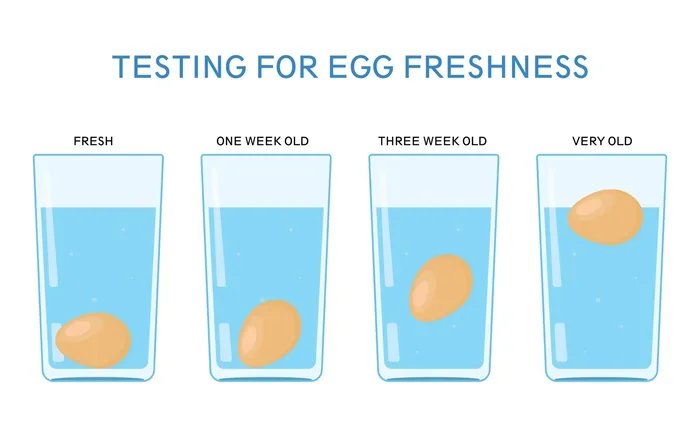
Fill a large bowl with cool water. Gently place the egg into the water. Watch what happens. Here is what the results mean:
- Fresh Egg: It sinks straight to the bottom and lies flat on its side. This egg is very fresh and perfect for any use.
- A Few Weeks Old: It sinks but stands upright on the bottom. This egg is still safe to eat but is getting older.
- Old Egg: It floats to the surface. This egg should be discarded. It is no longer fresh and may not be safe.
The reason this works ties back to the air cell we talked about. Older eggs have more air inside, which makes them buoyant. Fresh eggs are denser and heavier, so they sink. If you want to double-check, you can also compare the weight of the egg. For example, you might already know how to check weight at home without a machine, and the same principle applies here. A fresh egg feels heavier for its size compared to an older one.
Tips for the Float Test
Use room temperature water for the most accurate results. Cold water can sometimes give slightly different readings. Also, test each egg individually. Do not drop multiple eggs in at once, or you might miss which one is which. If an egg floats but you are not sure, crack it into a separate bowl and check for off smells before throwing it away.
The Shake Test: A Quick and Easy Check
The shake test is another simple way to gauge freshness. You can do it anytime, anywhere, without any equipment. Hold the egg close to your ear and shake it gently. Listen carefully to what you hear.
A very fresh egg makes little to no sound. The white is thick and holds the yolk snugly in place. An older egg, however, will slosh around inside the shell. You may hear a distinct sloshing or swishing sound. This happens because the egg white has thinned out, giving the yolk more room to move.
The shake test is not as precise as the float test, but it is a great quick check. If you shake an egg and hear a lot of movement, it is probably not as fresh. If it is silent, you are likely dealing with a good egg. Use this test alongside the float test for the most reliable results.
Combining the Shake Test with Other Methods
No single test is perfect on its own. But combining two or three methods gives you much more confidence. Try the shake test first for a quick read. Then do the float test for confirmation. Finally, use your nose after cracking the egg. Together, these checks cover all the bases. They tell you about the air cell, the liquid consistency, and the smell. That is a complete egg freshness check in just a few minutes.
The Smell Test: Your Most Reliable Tool
Your nose is one of the best tools for checking egg freshness. Once you crack an egg, smell it right away. A fresh egg has little to no odor. It might smell slightly earthy or like nothing at all. That is completely normal.
A bad egg, on the other hand, has a very distinct sulfur or rotten smell. Even a slightly off smell is a warning sign. Do not ignore it. The egg smell test is the most reliable indicator because bacteria produce gases that create that unmistakable rotten odor. No matter what the float test or shake test says, if the egg smells bad, throw it out.
When to Trust the Smell Test
The smell test is especially useful for eggs that pass the float test but are a few weeks old. Sometimes an egg looks fine and sinks in water but has started to go bad inside. The smell catches what the other tests might miss. Always crack eggs into a separate bowl before adding them to your recipe. This way, you can check the smell and appearance without ruining the whole dish.
If you are ever unsure about an egg, trust your instincts. If something seems off, it probably is. Your senses are remarkably good at detecting spoilage. Do not take chances with food safety.
Checking the Egg Carton and Dates
Before you even crack an egg, look at the carton. Most egg cartons have dates printed on them. Understanding these dates helps you estimate freshness before you start testing.
Sell-By Date vs. Pack Date
The sell-by date tells the store how long to display the eggs. The pack date tells you when the eggs were packaged. In the United States, the pack date is often a three-digit Julian date. For example, 001 means January 1st, and 365 means December 31st. Eggs are usually good for four to five weeks from the pack date when stored properly in the fridge.
You can also check the egg carton date for a best-by or use-by date. These give you a general window of freshness. But remember, these dates are estimates. The actual freshness can vary based on storage conditions. That is why the float test and smell test are so valuable. They tell you the real story.
Grades and Labels on Egg Cartons
Egg cartons also show USDA grades. Grade AA eggs have the thickest whites and the roundest yolks. Grade A eggs are very similar but have slightly thinner whites. Grade B eggs have thinner whites and are usually used in processed egg products. For the best eating and baking, look for Grade AA or Grade A. These labels give you a starting point for egg quality before you even open the carton.
Some cartons also say “farm fresh” or “pasture-raised.” These terms sound appealing but do not guarantee freshness. Always check the pack date or use the tests we have covered. Freshness is about time and storage, not just how the hens were raised.
Visual Inspection of Egg Whites and Yolks
Once you crack an egg, take a close look. The appearance of the white and yolk tells you a lot about freshness. This visual check is simple but very effective.
What Fresh Egg Whites Look Like
A fresh egg white is thick and cloudy. It holds the yolk in place like a cushion. The white has two layers: a thick inner layer and a thinner outer layer. The thick white is a sign of a very fresh egg. As the egg ages, the white becomes clear and runny. You will notice it spreads out more in the pan when you fry it.
If the white is mostly clear and watery, the egg is older but may still be safe. Use it quickly in a recipe that cooks thoroughly. If the white has any pink, green, or iridescent colors, that is a sign of bacterial contamination. Discard the egg immediately.
What Fresh Egg Yolks Look Like
A fresh yolk is round and stands up tall. It has a rich, deep orange or yellow color. The membrane around the yolk is firm and holds everything together. An older yolk is flatter and breaks easily. The color may also fade over time.
The egg yolk appearance is a helpful indicator but not definitive on its own. Feed and breed of the hen can also affect yolk color. So combine this visual check with the float test and smell test for the most accurate picture of raw egg freshness.
How to Store Eggs for Maximum Freshness
Proper storage makes a big difference in how long your eggs stay fresh. Even the freshest eggs will go bad faster if stored incorrectly. Follow these simple tips to keep your eggs at their best.
Refrigerator Storage Tips
Always store eggs in the refrigerator, not on the door. The door is the warmest part of the fridge because it opens and closes often. Instead, keep eggs in the main body of the fridge where the temperature is more consistent. Store them in their original carton. The carton protects the eggs from absorbing odors from other foods and helps maintain moisture.
Fresh eggs can last three to five weeks in the fridge. Hard-boiled eggs should be eaten within one week. If you are ever unsure about timing, use the tests we have covered. A quick float test or smell test clears up any doubts. And if you are curious about tracking weight and freshness at home, knowing how to check weight at home without a machine can also help you monitor changes in egg density over time.
Freezing Eggs for Long-Term Storage
If you have more eggs than you can use, consider freezing them. Crack the eggs into a freezer-safe container and beat them lightly before freezing. Label the container with the date. Frozen eggs last up to one year. Thaw them in the refrigerator overnight before using. Never freeze eggs in their shells, as the liquid inside expands and can crack the shell.
Proper storage is one of the best forms of egg storage tips you can follow. It prevents waste and ensures you always have fresh eggs ready when you need them.
Common Mistakes People Make When Checking Egg Freshness
Even with the best methods, people sometimes make mistakes that lead to wrong conclusions. Here are a few common errors to avoid.
- Relying on Only One Test: No single method is perfect. Use at least two tests for a reliable answer.
- Ignoring the Smell After Cracking: Always smell the egg even if it passed the float test. The nose does not lie.
- Confusing Sell-By with Expiration: The sell-by date is not an expiration date. Eggs can still be fresh well past this date.
- Washing Eggs Before Storing: Store-bought eggs in the US are already washed. Washing them again can push bacteria through the shell pores. Leave them unwashed until you are ready to use them.
- Assuming Color Determines Freshness: Brown eggs and white eggs have the same freshness standards. Shell color depends on the hen breed, not quality.
Avoiding these mistakes helps you make better decisions every time you reach for an egg from the fridge. It builds confidence and keeps your food safe.
Expert Insights on Egg Freshness
Food safety experts agree that the combination of the float test, smell test, and visual inspection is the gold standard for checking egg freshness at home. According to the USDA, eggs are safe to eat for several weeks past the pack date if they have been stored properly in the refrigerator. The key is to trust your senses. If something looks, smells, or feels off, it is better to be safe than sorry.
Professional chefs also recommend the float test as a go-to method. It is fast, requires no special equipment, and gives clear results. Many home cooks keep a bowl of water on the counter specifically for testing eggs before adding them to recipes. It becomes second nature after a few times.
Remember that freshness is not just about safety. It is also about cooking performance. Fresh eggs whip up into fluffier meringues, hold their shape better when poached, and taste richer in simple dishes like scrambled eggs or omelets. Taking the time to check freshness pays off in both safety and flavor.
Conclusion
Knowing how to check if eggs are fresh is one of the simplest and most useful skills you can develop in the kitchen. The float test, shake test, smell test, and visual inspection all work together to give you a clear picture. Check the carton date, store your eggs properly, and trust your senses. With these methods, you will never have to wonder about the eggs in your fridge again.
Fresh eggs make everything better. They taste richer, cook better, and keep you safe. Take a few moments to test your eggs before using them. Your food and your family will thank you. Start using these simple checks today and enjoy the confidence that comes with knowing exactly what is in your kitchen.
Frequently Asked Questions
Can you eat eggs that float in water?
No, floating eggs are old and should be discarded. A floating egg has a large air cell inside, which means it has lost moisture and freshness over time. While it might not always be dangerous, it is best to throw it out to be safe.
How long do eggs stay fresh in the refrigerator?
Fresh eggs can last three to five weeks in the refrigerator when stored properly in their original carton. The pack date on the carton gives you a starting point. Always use the float test or smell test if you are unsure about an egg’s freshness.
What does a bad egg smell like?
A bad egg has a strong sulfur or rotten egg smell. The odor is unmistakable and comes from gases produced by bacteria as the egg spoils. If you detect any off smell after cracking an egg, discard it immediately and do not taste it.
Is the egg float test accurate?
Yes, the egg float test is a reliable and widely used method. It works because older eggs have larger air cells that make them more buoyant. For the most accurate results, combine the float test with the smell test and visual inspection.
Can you freeze fresh eggs?
Yes, you can freeze eggs for up to one year. Crack them into a freezer-safe container and beat them lightly before freezing. Never freeze eggs in their shells. Always thaw frozen eggs in the refrigerator overnight before using them.
Does egg freshness affect baking?
Yes, freshness affects how well eggs perform in baking. Fresh eggs whip up better, hold their structure, and give baked goods a better texture. Older eggs have thinner whites and flatter yolks, which can change the outcome of cakes, meringues, and other recipes.