How Much Time on the Elliptical to Lose Weight

Losing weight on the elliptical isn’t just about a single magic number of minutes. It’s about creating a consistent calorie deficit through a combination of workout duration, intensity, and frequency, paired with a healthy diet. For most people, aiming for 30 to 60 minutes per session, 3 to 5 times a week, at a moderate to vigorous intensity, is the sweet spot for sustainable fat loss. The key is challenging yourself progressively and listening to your body to avoid burnout or injury.
Key Takeaways
- Calorie Deficit is King: Weight loss fundamentally requires burning more calories than you consume. The elliptical is a tool to help create that deficit.
- Duration Guidelines: Aim for 30-60 minutes per session. Beginners start at 20-30 minutes, building up as fitness improves.
- Intensity Matters More Than Time: A vigorous 30-minute workout can be more effective for fat burning than a slow 60-minute one. Use the Rate of Perceived Exertion (RPE) scale.
- Consistency Over Perfection: Regular, moderate workouts (e.g., 45 mins, 4x/week) yield better long-term results than occasional marathon sessions.
- Combine with Strength Training: Adding 2 days of resistance training builds muscle, which boosts your resting metabolism and improves elliptical performance.
- Nutrition is Non-Negotiable: You cannot out-exercise a poor diet. Pair your elliptical routine with mindful eating for real weight loss.
- Listen to Your Body: Proper form, rest days, and gradual progression prevent injury and burnout, keeping you on track longer.
📑 Table of Contents
- How Much Time on the Elliptical to Lose Weight? The Real Answer
- How the Elliptical Works for Weight Loss: The Science of the Burn
- The Time-Intensity Trade-Off: It’s Not Just About Clocking Minutes
- Building Your Elliptical Weight Loss Plan: Time, Frequency, and Progression
- The Missing Piece: Why Your Diet is 80% of the Weight Loss Equation
- Common Mistakes That Sabotage Your Elliptical Weight Loss
- Conclusion: Your Sustainable Elliptical Weight Loss Formula
How Much Time on the Elliptical to Lose Weight? The Real Answer
So you’ve stepped onto the elliptical, the machine that promises a low-impact, full-body burn. You’re ready to put in the work, but the big question echoes in your head with every rotations: How long do I actually need to do this to see the scale move? It’s a fair question, and the internet is full of quick-fix answers. But the truth is, the “perfect” time isn’t a one-size-fits-all number. It’s a personal equation involving your current fitness, your goals, your effort, and what you eat. This guide will break down the science, the strategies, and the practical plans to help you use the elliptical not just for time spent, but for results earned. Forget guessing games; let’s build your effective weight loss formula.
How the Elliptical Works for Weight Loss: The Science of the Burn
Before we talk minutes, we need to understand why the elliptical is a powerful ally. Unlike a treadmill, which primarily works your legs against gravity, an elliptical moves in a smooth, elliptical path. This motion engages both your upper and lower body simultaneously—think glutes, hamstrings, quads, calves, chest, back, and shoulders. More muscle groups activated means a higher overall energy (calorie) expenditure. It’s a true cardiovascular and muscular endurance workout in one.

Visual guide about How Much Time on the Elliptical to Lose Weight
Image source: thelist.com
Calories In vs. Calories Out: The Non-Negotiable Rule
Weight loss, at its core, is governed by a simple energy balance equation: Calories In (food/drink) vs. Calories Out (BMR + activity). To lose weight, you must consume fewer calories than you burn, creating a “calorie deficit.” The elliptical helps tip the “Calories Out” side of the scale. The number of calories you burn during a session depends on three key factors:
- Your Weight: A heavier person burns more calories performing the same work than a lighter person.
- Intensity: How hard you push. Higher resistance and faster strides spike your heart rate and calorie burn.
- Duration: How long you sustain that effort. More time generally means more calories burned, but intensity plays a crucial role (we’ll get to that).
For example, a 155-pound person might burn about 335 calories in 30 minutes of moderate elliptical work, while a 185-pound person might burn around 400 calories in the same time. Use your machine’s calorie counter as a rough estimate, but know it’s not perfectly accurate for everyone.
Low-Impact, High Reward: The Fat-Loss Advantage
The elliptical’s gliding motion is incredibly joint-friendly. There’s no pounding, making it accessible for those with knee, hip, or back issues, or for anyone carrying extra weight that stresses joints. This low-impact nature means you can exercise more frequently and recover faster than with high-impact activities like running. Consistency is the golden ticket to weight loss, and the elliptical’s accessibility supports that consistency. You’re less likely to be sidelined by pain, allowing you to stick to your schedule week after week.
The Time-Intensity Trade-Off: It’s Not Just About Clocking Minutes
This is the most critical concept to grasp. Thirty minutes of high-intensity effort can be far more effective for fat loss than a sluggish hour. Why? Because intensity dictates your body’s metabolic response.
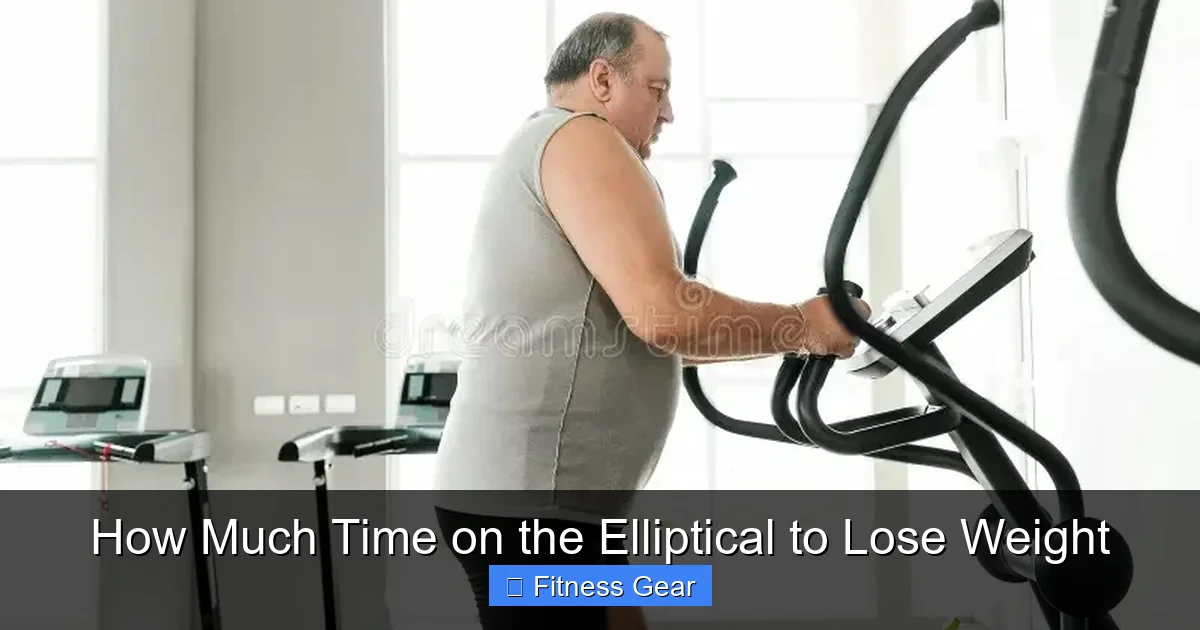
Visual guide about How Much Time on the Elliptical to Lose Weight
Image source: thumbs.dreamstime.com
Understanding Exercise Intensity and the “Afterburn” Effect
Intensity is often measured by your heart rate or a simple Rate of Perceived Exertion (RPE) scale from 1 (very easy) to 10 (max effort). For weight loss, you want to spend most of your workout in the moderate to vigorous zone.
- Moderate Intensity (RPE 5-6): You’re breathing deeply but can hold a conversation in short sentences. This is a great, sustainable fat-burning zone.
- Vigorous Intensity (RPE 7-8): Talking is limited to a few words. Your heart is pounding. This is where you tap into significant calorie burn and trigger Excess Post-exercise Oxygen Consumption (EPOC), often called the “afterburn.” EPOC means your metabolism stays elevated for hours after your workout, burning extra calories as your body works to recover.
Shorter, more intense sessions (like 20-30 minutes of HIIT-style intervals on the elliptical) can stimulate a powerful afterburn. Longer, steady-state sessions (45-60 minutes at a steady moderate pace) burn a high number of calories during the workout. The best approach often combines both.
Practical Intensity Checks Without a Heart Rate Monitor
Not everyone uses a chest strap. Use these simple tests:
- The Talk Test: As mentioned, your ability to speak indicates intensity.
- Sweat & Breathing: At moderate intensity, you’ll sweat lightly and breathe deeply. At vigorous, you’ll sweat profusely and breathe hard.
- Resistance & RPM: Increase the resistance level and/or your strides per minute (RPM) to ramp up intensity.
Building Your Elliptical Weight Loss Plan: Time, Frequency, and Progression
Now, let’s translate the science into a actionable weekly schedule. The goal is to build habits that last, not to burn out in a week.

Visual guide about How Much Time on the Elliptical to Lose Weight
Image source: thumbs.dreamstime.com
The Foundational Schedule for Beginners (First 4-6 Weeks)
If you’re new to exercise or returning after a long break, your primary goal is adaptation and consistency.
- Frequency: 3 days per week (e.g., Monday, Wednesday, Friday).
- Duration: Start with 20-30 minutes per session.
- Intensity: Focus on a comfortable, moderate pace (RPE 4-5). Your goal is to complete the time without stopping.
- Progression: Each week, try to add 2-5 minutes to your total time until you comfortably hit 30-45 minutes. Then, start adding slight resistance.
The Intermediate Plan for Steady Fat Loss
Once you can comfortably exercise for 30-45 minutes, it’s time to optimize for calorie burn.
- Frequency: 4-5 days per week.
- Duration: 45-60 minutes per session.
- Structure: Don’t just plod along. Structure your sessions:
- 2-3 days: Steady-state cardio. Maintain a moderate, consistent pace (RPE 5-6) for the full duration.
- 1-2 days: Interval training. Warm up for 5 mins. Then alternate: 1 minute at a very hard pace (RPE 8-9), 2 minutes at a very easy recovery pace (RPE 2-3). Repeat for 8-10 cycles. Cool down for 5 mins. Total time: ~25-30 mins, but extremely potent.
Advanced Strategies for a Metabolic Boost
For those who are already fit and looking to break a plateau:
- Incorporate Incline/Resistance Intervals: Instead of just speed, use the machine’s ramp or resistance buttons. Do 2 minutes at high resistance (like climbing a hill), then 2 minutes at low resistance (flat road).
- Add Upper Body Focus: Actively push and pull the handles with power, not just letting them move. This recruits more muscle, burning more calories.
- Try “Pyramid” Workouts: Gradually increase resistance or speed every 5 minutes, peak, then gradually decrease.
The Missing Piece: Why Your Diet is 80% of the Weight Loss Equation
You can exercise for an hour a day, every day, and still not lose weight if your nutrition is off. This is the most common pitfall. The elliptical creates the opportunity for a deficit, but diet creates the reality.
Estimating Your Calorie Needs and Deficit
First, estimate your Total Daily Energy Expenditure (TDEE) using an online calculator. This is the number of calories you burn in a day, including exercise. To lose weight safely (1-2 pounds per week), subtract 500 calories from your TDEE to create your daily target. Do not go below 1,200 calories for women or 1,500 for men without medical supervision.
Fueling Your Elliptical Workouts
Don’t starve yourself before or after. Eat a small, balanced snack with carbs and protein 60-90 minutes before your session (e.g., banana with peanut butter, Greek yogurt). Within 60 minutes after, refuel with protein to aid muscle repair (e.g., a protein shake, chicken and rice). This supports recovery and keeps your metabolism humming.
The Hydration Factor
Dehydration can masquerade as hunger and drastically reduce workout performance. Drink water consistently throughout the day. A good rule is to drink 16-20 oz of water 2-3 hours before your elliptical session, and sip during.
Common Mistakes That Sabotage Your Elliptical Weight Loss
Avoid these errors to stay on track:
Mistake 1: Leaning on the Handrails
This transfers your body weight off your legs and reduces calorie burn by up to 50%. It also prevents you from engaging your core. Stand tall, with a light touch on the handles for balance only. Let your legs do the work.
Mistake 2: Using the Same Workout Every Time
Your body adapts quickly. If you always do the same 30-minute routine at the same resistance, your calorie burn will plateau. Change your workout every 2-3 weeks. Increase time, resistance, or try new interval patterns.
Mistake 3: Ignoring Strength Training
Cardio alone can lead to muscle loss, especially in a calorie deficit. Muscle is metabolically active tissue. The more you have, the higher your resting metabolic rate. Commit to 2 days per week of full-body strength training (bodyweight, dumbbells, machines) to preserve and build muscle, making your body a more efficient fat-burner.
Mistake 4: Rewarding Yourself with Food
It’s easy to think, “I burned 400 calories, I can eat this.” But we often overestimate burn and underestimate intake. That “reward” can easily exceed the calories you just burned, negating the deficit. Track your food intake honestly, even on workout days.
Conclusion: Your Sustainable Elliptical Weight Loss Formula
So, how much time? For a sustainable, effective weight loss journey on the elliptical, aim for 150 to 300 minutes per week of moderate to vigorous activity, broken into 30-60 minute sessions. Start where you are, be consistent, and progressively challenge yourself with more time, higher resistance, or smart intervals. But remember, the elliptical is your powerful partner, not your sole solution. The real magic happens when you combine that consistent effort with a nutrient-dense, calorie-conscious diet and supportive strength training. Ditch the search for a single “magic minute.” Instead, focus on building a weekly rhythm of movement you enjoy, fuel your body well, and trust the process. The results will follow.
Frequently Asked Questions
Is 30 minutes on the elliptical enough to lose weight?
Yes, 30 minutes can be enough if you maintain a vigorous intensity (like HIIT intervals) and combine it with a calorie-controlled diet. For moderate, steady-state work, 30 minutes is a great start, but you may need to build up to 45-60 minutes or increase frequency to see significant results.
Is the elliptical better for weight loss than running?
It’s not necessarily “better,” but it’s a highly effective alternative. The elliptical burns comparable calories to jogging for the same time but with far less joint stress. This allows for more frequent, longer-term training, which is a huge advantage for sustainable weight loss, especially for those with joint concerns or higher body weight.
Should I use the elliptical every day for weight loss?
Not necessarily. Daily high-intensity elliptical sessions can lead to overuse injuries and burnout. For most people, 3-5 days per week is optimal. This allows for essential rest days and time for strength training, which is crucial for preserving metabolism-boosting muscle during weight loss.
How do I lose belly fat specifically on the elliptical?
You cannot “spot reduce” fat from your belly by using the elliptical. Fat loss occurs systemically across your body. However, by consistently creating a calorie deficit through elliptical workouts and diet, you will eventually lose fat from your abdominal area. The elliptical’s full-body engagement helps build overall muscle, which improves body composition as you lose weight.
What resistance level should I use on the elliptical to lose weight?
There’s no universal number. Focus on intensity, not the number. Choose a resistance that makes your legs work hard. For steady-state, you should feel challenged but able to maintain pace for 30+ minutes. For intervals, your “work” phases should use a resistance that makes you feel like you’re “pushing” against a strong force, nearly maxing out your effort for 60-90 seconds.
Why am I not losing weight even though I use the elliptical daily?
The most common reason is that your diet is not aligned with your goals. You may be consuming more calories than you think, or your body has adapted to your routine. Revisit your calorie intake, ensure you’re not undereating (which slows metabolism), and change your elliptical workout pattern to include more intervals or increased resistance. Also, consider non-scale victories like measurements, how clothes fit, and strength gains.