The number of calories burned on a recumbent bike depends on your weight, workout intensity, and duration. A 155-pound person can burn roughly 260-315 calories in a vigorous 30-minute session. While it’s a low-impact, joint-friendly cardio option, understanding MET values and using a heart rate monitor provides the most accurate calorie burn estimate for your personal goals.
Key Takeaways
- Calorie burn is highly individual: Your weight is the single biggest factor; a heavier person burns more calories performing the same work as a lighter person.
- Intensity matters more than time: A shorter, high-intensity interval session can burn more calories (and boost metabolism) than a longer, leisurely ride.
- Recumbent bikes are joint-friendly, not “easy”: The reclined position reduces stress on knees, hips, and back, making it sustainable for long-term fitness without sacrificing calorie expenditure.
- MET values are the standard metric: Calorie calculations use Metabolic Equivalent of Task (MET) values, with recumbent biking ranging from 3.5 (light) to 8.0+ (vigorous) METs.
- Machine calorie counters are estimates: They often overestimate. Using a heart rate monitor or fitness tracker provides a more personalized and accurate reading.
- It’s excellent for building aerobic base: Consistent recumbent biking improves cardiovascular health, which increases your resting metabolic rate over time.
- Form and resistance are key: Proper seat adjustment and increasing resistance (not just speed) is crucial for building strength and burning more calories.
📑 Table of Contents
- Understanding the Recumbent Bike: More Than Just a Chair on Wheels
- The Core Equation: How Calorie Burn is Actually Calculated
- Real-World Numbers: What Does That Mean for You?
- Why the Recumbent Bike is a Calorie-Burning Champion for Long-Term Success
- Maximizing Your Calorie Burn: Practical Strategies for the Recumbent Bike
- Beyond the Calorie Count: The Holistic Benefits of Recumbent Biking
- Conclusion: Your Sustainable Calorie-Burning Partner
Understanding the Recumbent Bike: More Than Just a Chair on Wheels
Let’s clear the air right away: a recumbent bike is not the “easy” or “lazy” option some folks mistakenly label it. That reclined, bucket-seat design isn’t for comfort over effort—it’s for biomechanical efficiency and sustainability. The back support encourages a powerful push through your entire foot, engaging your glutes and hamstrings more effectively than a traditional upright bike, where you might default to a quad-dominant pull. This seated position also drastically reduces the compressive force on your knees, hips, and spine. For anyone with arthritis, past injuries, or simply more mature joints, this is a game-changer. It means you can consistently perform cardio for longer durations and more frequently without pain, which is the ultimate secret to long-term calorie burn and fitness. The goal isn’t to burn the most calories in a single, agonizing session you’ll never repeat. It’s to create a sustainable habit where you can show up, work hard, and recover well, day after day.
The Core Equation: How Calorie Burn is Actually Calculated
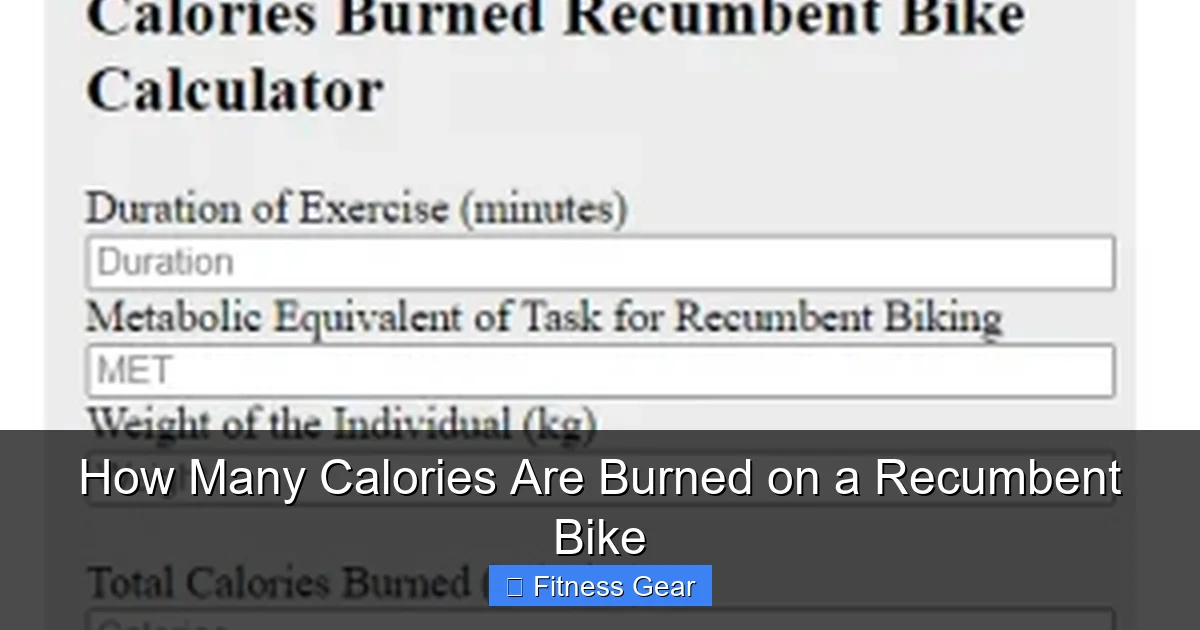
Before we dive into numbers, we need to understand the formula. The gold standard for estimating calorie expenditure during exercise is the MET (Metabolic Equivalent of Task). One MET is the energy you use at complete rest. An activity with a MET value of 4 means you’re expending four times the energy of resting.
Visual guide about How Many Calories Are Burned on a Recumbent Bike
Image source: calculator.academy
Breaking Down the MET Values for Recumbent Biking
Compendiums of physical activities assign MET values based on measured oxygen consumption. For recumbent cycling, these values create a spectrum:
- Light Effort (3.5-4.5 METs): This is a very gentle pedal, maybe watching TV or reading. You’re moving, but not breaking a sweat.
- Moderate Effort (5.0-6.5 METs): This is your steady-state, “cardio” pace. You’re breathing deeper, can talk in short sentences, and feel a consistent effort. Most general fitness recommendations aim for this zone.
- Vigorous Effort (7.0-8.0+ METs): This is a hard effort. You’re pushing against significant resistance, your heart is pounding, and conversation is limited to a few words. High-Intensity Interval Training (HIIT) on a recumbent bike falls here.
The basic formula is: Calories Burned per minute = (METs x 3.5 x weight in kg) / 200. The “3.5” represents an estimate of oxygen consumption per kilogram of body weight per minute at rest. Online calculators and machine computers use variations of this, often factoring in age and gender for a slightly more tailored estimate.
Real-World Numbers: What Does That Mean for You?
Let’s translate METs into tangible calorie counts. The following estimates are for a 30-minute session. Remember, these are averages. Your personal burn will vary based on exact fitness level, muscle mass, and genetics.

Visual guide about How Many Calories Are Burned on a Recumbent Bike
Image source: healthresearchfunding.org
By Weight Category (Moderate Pace, ~5.5 METs)
- 125 lbs (57 kg): Approximately 200-220 calories.
- 155 lbs (70 kg): Approximately 250-275 calories.
- 185 lbs (84 kg): Approximately 300-330 calories.
- 220 lbs (100 kg): Approximately 360-390 calories.
Notice the linear relationship? More mass requires more energy to move. If you weigh 220 lbs, you’re burning significantly more than a 125 lb person doing the exact same workout on the same bike. This is why comparing calorie burn between people is often meaningless.
By Intensity (For a 155 lb person)
- Light, leisurely (3.5 METs): ~130 calories in 30 minutes.
- Moderate, steady-state (5.5 METs): ~260 calories in 30 minutes.
- Vigorous, hard effort (7.5 METs): ~355 calories in 30 minutes.
- Very Vigorous/HIIT (9.0+ METs): ~425+ calories in 30 minutes (with intervals).
The jump from moderate to vigorous is substantial. This is where strategic programming—like adding intervals—pays huge dividends. A 20-minute HIIT session at 9.0 METs can burn more calories than a stagnant 40-minute moderate ride.
Why the Recumbent Bike is a Calorie-Burning Champion for Long-Term Success
So we have the numbers. But why choose a recumbent bike over an upright bike, treadmill, or elliptical for your calorie-burning goals? The answer lies in adherence and recovery.

Visual guide about How Many Calories Are Burned on a Recumbent Bike
Image source: fitnessdy.com
1. The Unbeatable Low-Impact Advantage
Every time your foot strikes a treadmill belt or you push down on an upright bike pedal, a shockwave travels up your kinetic chain. Over years, this repetitive impact contributes to joint wear. The recumbent bike’s seat distributes your weight, and the pedal stroke is a smooth, circular motion with minimal shear force. This means you can exercise daily if desired, or at least return to your next session feeling fresher. More frequent, consistent sessions lead to a higher weekly calorie burn and better cardiovascular adaptation.
2. Superior for Longer Duration Workouts
Because it’s so comfortable and stable, it’s psychologically and physically easier to stay on a recumbent bike for 45-60 minutes. Burning 400-600 calories in a single, comfortable session is a massive weekly contribution. For weight loss, total weekly calorie deficit is king. A sustainable 60-minute moderate ride is often more valuable than a brutal 30-minute session that leaves you too sore to move for two days.
3. Engages Different Muscles for a Balanced Burn
The recumbent position shifts emphasis to the posterior chain—glutes and hamstrings. These are large, powerful muscle groups. Working them intensely not only burns calories during the session but also contributes to a higher Excess Post-exercise Oxygen Consumption (EPOC), commonly called the “afterburn effect.” Building these muscles also increases your resting metabolic rate, meaning you burn more calories 24/7.
Maximizing Your Calorie Burn: Practical Strategies for the Recumbent Bike
Knowing the potential is one thing; unlocking it is another. Here’s how to get the most out of every pedal stroke.
Ditch the “Speed is King” Mindset
Beginners and even intermediate riders often equate a fast pedal with a good workout. On a recumbent bike, resistance is your primary tool. Pedaling fast against no resistance is like spinning your wheels—you’re moving, but the energy cost is low. To truly ramp up calorie burn:
- Increase resistance until you feel a strong push with each downstroke. Your legs should feel like they’re doing work, not just moving air.
- Maintain a challenging cadence (pedal strokes per minute). A target of 60-80 RPM under moderate-to-high resistance is ideal for power and calorie burn.
Embrace High-Intensity Interval Training (HIIT)
This is the single best way to spike your calorie burn, improve fitness quickly, and trigger a significant afterburn. A simple protocol:
- Warm-up: 5 minutes of easy pedaling.
- Interval Block: Alternate 60-90 seconds of MAXIMUM effort (high resistance, all-out sprint) with 60-90 seconds of very easy recovery pedaling. Repeat 6-10 times.
- Cool-down: 5 minutes of easy pedaling.
A 20-minute HIIT session on a recumbent bike can match or exceed the calorie burn of a 45-minute steady ride, and the metabolic benefits extend for hours afterward.
Perfect Your Form and Setup
An improperly adjusted bike wastes energy and limits power. Your seat position is critical. When the pedal is at its lowest point, your knee should have a slight bend (about 25-30 degrees). If your leg is fully locked or you’re rocking your hips, adjust the seat forward or backward. Place a slight, gentle arch in your lower back against the seat—don’t slump. This engages your core and protects your spine, allowing for more powerful strokes. Push through your heel on the downstroke to fully activate your glutes and hamstrings.
Beyond the Calorie Count: The Holistic Benefits of Recumbent Biking
While tracking calories is a useful metric, it’s reductionist. The true value of a recumbent bike extends far beyond the number on a screen.
Cardiovascular Health Without the Joint Tax
Regular use strengthens your heart muscle, improves cholesterol profiles, lowers blood pressure, and enhances insulin sensitivity. Because you can do it daily without overuse injuries, the cumulative cardiovascular benefit is immense. A healthier heart and circulatory system means your body becomes more efficient at delivering oxygen and nutrients, which indirectly supports all your metabolic functions, including calorie management.
Rehabilitation and Active Recovery
This is where the recumbent bike shines brightest. Post-surgery (knee, hip, back), during pregnancy, or while managing chronic conditions like osteoarthritis, the recumbent bike is often the only form of cardio approved. It allows you to maintain fitness, burn calories, and promote blood flow to healing tissues without risking further damage. It’s the ultimate tool for staying active when other exercises are off the table.
Mental Health and Accessibility
The stable, comfortable seat means no fear of falling. You can read a book, watch a show, or simply close your eyes and focus on your breath and rhythm. This lowers the mental barrier to entry. For those with balance issues, severe obesity, or anxiety about gym environments, the recumbent bike offers a safe, private, and effective way to move. Consistent exercise is a proven mood-booster and stress-reducer, and making it accessible is key.
Conclusion: Your Sustainable Calorie-Burning Partner
So, how many calories are burned on a recumbent bike? The honest answer is: enough to make a real difference, and in a way your body will thank you for. The specific number for you depends on your body and your effort. A 155-pound person can expect to burn 250-350 calories in a solid 30-minute session, with the potential for much more through intense intervals.
But the real takeaway is this: the recumbent bike’s superpower is sustainability. Its low-impact nature allows for frequency. Its comfortable design enables longer durations. Its resistance-based work builds muscle that burns calories at rest. By choosing the recumbent bike, you’re not choosing a lesser workout; you’re choosing a smarter, more sustainable path to your calorie-burning and fitness goals. Focus on progressive overload—gradually increasing resistance or time—listen to your body, and use the intervals. The calories will follow, and so will the long-term health benefits.
Frequently Asked Questions
Are recumbent bike calorie counters accurate?
No, they are generally estimates and often overestimate calorie burn, especially at lower intensities. They use generic formulas that don’t account for your individual muscle mass, metabolism, or precise heart rate. For a more accurate reading, use a heart rate monitor paired with a fitness app that incorporates your personal data.
Is a recumbent bike better for weight loss than an upright bike?
Neither is inherently “better” for weight loss; calorie burn depends on effort, not the bike type. However, the recumbent bike’s comfort and joint-friendliness often allow for longer, more frequent sessions, which can lead to a greater weekly calorie deficit for many people. It also engages the glutes and hamstrings more, potentially building more metabolism-boosting muscle.
Can I lose belly fat just by using a recumbent bike?
You cannot “spot reduce” fat from any specific area, including the belly. Recumbent biking is excellent for burning overall body fat and creating the calorie deficit needed for fat loss. Combined with a healthy diet and strength training (which builds muscle to raise your resting metabolism), it will contribute to losing fat from your midsection and everywhere else.
How often should I use a recumbent bike to see results?
For general fitness and calorie burn, aim for 3-5 sessions per week. Each session should be at least 20-30 minutes for meaningful cardio benefits. Consistency is far more important than occasional marathon sessions. Pairing it with 2 days of full-body strength training will accelerate results by building muscle.
Is recumbent biking good for beginners or seniors?
Absolutely. It is one of the safest and most accessible forms of cardio. The stable, supported seating eliminates balance concerns and falls. The low-impact motion is gentle on all joints. Beginners and seniors can start with very light resistance and short durations (10-15 minutes), gradually building up as fitness improves.
What’s the difference in muscle usage between recumbent and upright bikes?
The recumbent position shifts the pedal stroke’s emphasis. On an upright bike, you tend to pull up more with your hip flexors and quads. On a recumbent bike, the seat back support allows you to push down and back more powerfully through your heels, leading to greater activation of the glutes and hamstrings. The core is also more engaged to stabilize the pelvis against the backrest.