Can You Get Big Arms with Just Dumbbells
Yes, you can absolutely get big arms with just dumbbells. With the right dumbbell exercises, consistent arm workout routines, and proper nutrition, dumbbells alone can build impressive arm size and muscle growth. This guide covers the best exercises, tips, and plans to help you pack on arm mass using nothing but a pair of dumbbells.
Can you get big arms with just dumbbells? The short answer is a resounding yes. Thousands of lifters have built impressive arms using nothing more than a pair of dumbbells and a little know-how. Whether you are training at home or in a cramped gym, dumbbells give you everything you need to trigger serious arm growth.
The idea that you need fancy machines or heavy barbells to build big arms is a myth. Dumbbells allow a full range of motion, fix strength imbalances between sides, and offer countless exercise variations. If you have been wondering whether your dumbbell setup can deliver real results, this guide will prove it can.
In this article, we will walk through the science behind arm growth, the best dumbbell exercises for every arm muscle, a sample workout plan, nutrition tips, and common mistakes to avoid. By the end, you will have everything you need to start building bigger arms today.
Key Takeaways
- Dumbbells are enough: You do not need a gym or barbell to build big arms. Dumbbells provide all the resistance you need.
- Compound and isolation moves matter: Combining exercises like curls and presses targets all arm muscles for balanced growth.
- Progressive overload is key: Gradually increasing weight or reps drives continuous muscle growth.
- Consistency beats everything: Training arms 2-3 times per week with proper form yields the best results.
- Nutrition fuels growth: Eating enough protein and calories is just as important as your workouts.
- Home workouts work: You can get massive gains from a simple home workout setup with dumbbells.
📑 Table of Contents
Why Dumbbells Are Perfect for Arm Growth
Many lifters overlook dumbbells in favor of barbells or machines. That is a big mistake. Dumbbells offer unique advantages that make them one of the best tools for building arm size and strength.
Full Range of Motion
Dumbbells let your joints move freely through their full range. This means your muscles stretch more and contract harder during every rep. A barbell locks you into a fixed path, but dumbbells adapt to your body. This alone can lead to better muscle activation and faster gains.
Fixing Strength Imbalances
Most people have a stronger side. With a barbell, your dominant arm can take over. Dumbbells force each arm to work independently. This means your weaker arm catches up over time, leading to more balanced and symmetrical arm development.
Joint-Friendly Training
Dumbbells are gentler on your joints than barbells. Your wrists, elbows, and shoulders can move naturally. This reduces injury risk and lets you train arms more frequently, which is great for muscle growth.
Versatility
With just one pair of dumbbells, you can target every arm muscle from different angles. You can adjust grip, rotation, and range of motion on the fly. Very few pieces of equipment offer this much flexibility for resistance training.
The Best Dumbbell Exercises for Big Arms
To build big arms, you need to hit every muscle from multiple angles. Below are the most effective dumbbell exercises for each part of your arm. These movements form the foundation of any solid arm workout plan.
Biceps
Your biceps are the front of your upper arm. They control elbow flexion and forearm rotation. Here are the top dumbbell moves to build them:
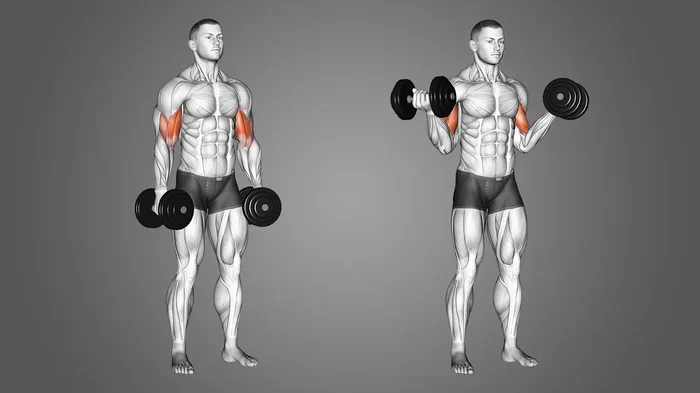
- Dumbbell Bicep Curls: The classic exercise. Stand tall, curl the weights up slowly, and lower them with control. This is the bread and butter of bicep training.
- Hammer Curls: Hold the dumbbells with a neutral grip (palms facing each other). This targets the brachialis, a muscle that sits under the bicep and makes your arms look wider.
- Incline Dumbbell Curls: Set a bench to a 45-degree incline. Let your arms hang back behind you, then curl up. This gives an incredible stretch on the bicep for deeper muscle fiber recruitment.
Triceps
Your triceps make up about two-thirds of your upper arm. If you want big arms, you must train them hard. These dumbbell exercises are essential:
- Dumbbell Overhead Tricep Extension: Hold one dumbbell with both hands behind your head. Extend your arms upward. This isolates the long head of the tricep for massive arm size.
- Dumbbell Skull Crushers: Lie on a bench and lower the dumbbells toward your forehead, then press back up. This hits all three heads of the tricep.
- Dumbbell Kickbacks: Lean forward and extend the dumbbell behind you. This is a great finishing movement that isolates the tricep with constant tension.
Forearms
Big forearms make your arms look complete. They also improve your grip strength for other lifts. Try these:
- Dumbbell Wrist Curls: Rest your forearms on your thighs and curl the dumbbells up with your wrists. Simple but effective.
- Reverse Wrist Curls: Flip your palms down and curl the dumbbells upward. This targets the extensors on the top of your forearm.
Shoulders and Upper Arms
Do not forget the shoulders. They frame your arms and make them look bigger. Overhead dumbbell presses and lateral raises complement your arm work perfectly. For a complete upper body approach, check out how to get big arms and chest with dumbbells for a well-rounded program.
How to Structure Your Dumbbell Arm Workout
Knowing the exercises is only half the battle. You need a smart arm workout routine to put them together effectively. Here is how to structure your training for maximum arm hypertrophy.
Training Frequency
Train your arms 2 to 3 times per week. This gives you enough stimulus to grow while allowing proper recovery. Arms recover quickly, so they can handle more frequent training than you might think.
Sets and Reps
For muscle growth, aim for 3 to 4 sets of 8 to 12 reps per exercise. This rep range hits the sweet spot for hypertrophy. When you can comfortably complete 12 reps, increase the weight slightly.
Rest Periods
Rest 60 to 90 seconds between sets for isolation exercises like curls and extensions. For compound movements like overhead presses, rest 90 to 120 seconds. Proper rest lets you maintain quality reps throughout your session.
Sample Weekly Arm Workout Plan
Here is a simple but effective plan you can follow. Perform this on two non-consecutive days each week.
- Dumbbell Bicep Curls — 3 sets of 10-12 reps
- Hammer Curls — 3 sets of 10-12 reps
- Dumbbell Overhead Tricep Extension — 3 sets of 10-12 reps
- Dumbbell Skull Crushers — 3 sets of 10-12 reps
- Dumbbell Wrist Curls — 2 sets of 15-20 reps
- Dumbbell Lateral Raises — 3 sets of 12-15 reps
Progressive Overload
The most important principle in strength training is progressive overload. This means gradually increasing the stress on your muscles over time. You can do this by adding weight, adding reps, or adding sets each week. Without progressive overload, your muscles have no reason to grow. Track your workouts and aim to improve slightly every session.
Nutrition: Fueling Arm Growth
Exercise triggers muscle growth, but nutrition builds it. You cannot expect big arms without feeding your body the right fuel. Here is what you need to focus on.
Protein Intake
Protein is the building block of muscle. Aim for 0.7 to 1 gram of protein per pound of body weight each day. Good sources include chicken, fish, eggs, Greek yogurt, beans, and protein shakes. Spread your protein intake across 3 to 5 meals for optimal muscle protein synthesis.
Caloric Surplus
To build muscle, you need to eat slightly more calories than you burn. A modest surplus of 250 to 500 calories per day works well for most people. This provides the energy your body needs to repair and grow muscle tissue after tough arm workouts.
Hydration
Water plays a huge role in muscle function and recovery. Aim for at least 8 glasses of water per day, more on training days. Dehydration can reduce your strength and slow down recovery.
Supplements That Help
While whole foods should come first, a few supplements can support your goals:
- Whey Protein: Convenient and effective for hitting daily protein goals.
- Creatine: One of the most researched supplements for strength and muscle growth.
- Multivitamin: Fills any nutritional gaps in your diet.
Common Mistakes That Slow Arm Growth
Even with the best exercises, poor habits can hold you back. Here are the most common mistakes lifters make when training arms with dumbbells.
Using Too Much Weight
Lifting too heavy leads to sloppy form and momentum. You swing the dumbbells, cheat the reps, and miss the target muscles. Choose a weight where you can complete all reps with clean, controlled form. Slow down the eccentric (lowering) phase for maximum muscle tension.
Skipping the Triceps
Many lifters focus only on biceps because they are the most visible arm muscle. But your triceps are actually bigger and contribute more to overall arm size. If you want balanced arm development, train your triceps just as hard as your biceps.
Neglecting Progressive Overload
Doing the same weights and reps every week will not drive growth. Your muscles adapt quickly. You must challenge them with heavier loads or more volume over time. Keep a training log and track your progress religiously.
Overtraining
More is not always better. Training arms every day without rest leads to fatigue and poor recovery. Muscles grow during rest, not during the workout. Give your arms 48 hours between sessions and prioritize sleep.
Poor Mind-Muscle Connection
Rushing through reps without focusing on the muscle being worked is a waste of time. Squeeze the muscle at the top of every rep. Feel it working throughout the entire range of motion. This focused approach dramatically improves arm definition and growth.
Expert Insights on Dumbbell Arm Training
Many seasoned coaches and athletes swear by dumbbell-only training for arm development. The key is understanding that dumbbells are not a limitation — they are a tool that, when used correctly, can produce incredible results.
Focus on time under tension, controlled eccentrics, and a full stretch at the bottom of each movement. These principles apply whether you are using dumbbells, barbells, or machines. The equipment matters less than how you use it.
One thing many experts emphasize is variety. Your muscles adapt to the same movements over time. Rotate between different grip positions, angles, and rep ranges to keep challenging your muscles in new ways. For more guidance on building a complete physique with dumbbells alone, you can explore can you build a good body with just dumbbells for additional strategies.
Quick Tips for Maximum Arm Growth
- Slow down your reps: Take 3 seconds to curl up and 3 seconds to lower. This doubles your time under tension.
- Use a full range of motion: Do not cut reps short. Full stretches and full contractions maximize muscle fiber recruitment.
- Train arms after compound movements: Do not exhaust your arms before pressing or pulling movements. Save arm isolation work for the end of your session.
- Vary your grip: Switch between supinated, pronated, and neutral grips to hit different parts of your arm muscles.
- Rest 48 to 72 hours between arm sessions: Recovery is when growth actually happens.
- Eat protein within 2 hours post-workout: This fuels muscle repair and kickstarts recovery.
Conclusion
Can you get big arms with just dumbbells? Absolutely. The evidence is clear, and the results speak for themselves. Dumbbells provide all the resistance, variety, and adaptability you need to build impressive arm size and strength. You do not need a fancy gym, expensive machines, or a barbell. A pair of dumbbells and a solid plan are all it takes.
Focus on the exercises outlined in this guide. Structure your arm workout with proper volume and intensity. Fuel your body with enough protein and calories. Avoid the common mistakes that slow progress. And most importantly, stay consistent. Arm growth does not happen overnight, but with dedication and smart training, you will see results.
Start today. Pick up those dumbbells, follow the plan, and commit to the process. Your bigger, stronger arms are waiting.
Frequently Asked Questions
Can beginners build big arms with just dumbbells?
Yes, beginners can build significant arm size with just dumbbells. Your body responds quickly to new stimuli in the early stages of training. Focus on learning proper form, eating enough protein, and training consistently 2 to 3 times per week.
How long does it take to see arm growth with dumbbells?
Most people start noticing visible changes in arm size within 6 to 8 weeks of consistent training. However, significant growth takes 3 to 6 months of dedicated effort. Genetics, nutrition, and recovery all play a role in your timeline.
What weight dumbbells do I need for big arms?
You can build big arms with any weight dumbbells, as long as you progressively overload over time. If you have light dumbbells, focus on higher reps and slow tempos. If you have heavier dumbbells, focus on lower reps with controlled form. The key is challenging your muscles consistently.
Should I train biceps and triceps on the same day?
Yes, training both biceps and triceps in the same session is effective and efficient. Since they are opposing muscle groups, you can alternate between curl and extension exercises to keep your muscles fresh. This approach works great for a focused arm day workout.
Can I get bigger arms at home with just dumbbells?
Absolutely. Home dumbbell workouts can produce excellent arm growth. You do not need a gym membership or expensive equipment. Follow a structured routine, eat well, and stay consistent. For more tips on training arms at home, check out how to get bigger arms at home with dumbbells.
Do I need to take supplements to build big arms with dumbbells?
Supplements are not required, but they can help. Protein powder makes it easier to hit your daily protein goals. Creatine is one of the most effective supplements for muscle growth and strength. Whole foods should always come first, but supplements can fill the gaps when needed.