Yes, a stationary bike can be a powerful tool for losing belly fat. It burns significant calories, reduces dangerous visceral fat, and builds core-stabilizing muscles. However, you cannot “spot reduce” fat from your belly alone; overall fat loss is required. Success hinges on consistent, challenging workouts combined with a calorie-controlled diet rich in whole foods. It’s a low-impact, accessible exercise perfect for home gyms.
Key Takeaways
- Calorie Burn is King: Stationary biking creates the calorie deficit necessary for overall fat loss, which includes stubborn belly fat.
- Targets Dangerous Visceral Fat: Regular aerobic exercise like biking is particularly effective at reducing health-harming visceral fat deep in the abdomen.
- Builds a Supporting Foundation: While not a direct ab workout, it strengthens core stabilizers and leg muscles, boosting metabolism.
- Consistency Trumps Intensity: Regular, moderate-to-vigorous sessions (150+ minutes/week) yield better long-term results than sporadic extreme efforts.
- Diet is Non-Negotiable: No exercise can outwork a poor diet. Fat loss requires consuming fewer calories than you burn.
- Workout Variety Drives Results: Combining steady-state rides with High-Intensity Interval Training (HIIT) maximizes fat-burning efficiency.
- Realistic Expectations are Crucial: Belly fat is often the last to go. Patience, measurement beyond the scale, and sustainable habits are key.
📑 Table of Contents
- Introduction: Your Home Gym’s Secret Weapon?
- The Science of Belly Fat: What You’re Actually Fighting
- How a Stationary Bike Attacks Belly Fat: The Mechanisms
- Crafting Your Belly-Fat-Burning Bike Workouts
- The Non-Negotiable Partner: Nutrition for Belly Fat Loss
- Debunking Myths & Setting Realistic Expectations
- Conclusion: Your Path to a Trimmer Midsection Starts Here
Introduction: Your Home Gym’s Secret Weapon?
Let’s be honest. That stubborn roll around your midsection is often the most frustrating place to try and slim down. You crunch, you plank, you diet… and it seems to hang on for dear life. So, when you eye that stationary bike in the corner of your home gym, a natural question pops up: Can a stationary bike really help me lose belly fat?
The short answer is a resounding yes, but with some crucial science-backed details. A stationary bike is not a magic wand that melts belly fat on command. Instead, it’s a remarkably efficient, low-impact engine for creating the calorie deficit and metabolic conditions that force your body to tap into its fat stores—including the ones around your waist. For anyone building a home gym, it’s one of the most strategic investments you can make for overall health and a trimmer torso.
In this deep dive, we’ll separate the fitness facts from the fiction. We’ll explore exactly how stationary biking attacks belly fat, the best ways to structure your rides for maximum impact, and why what you eat matters just as much (if not more) than your pedaling. Get ready to turn that stationary bike into your personal belly-fat-burning machine.
The Science of Belly Fat: What You’re Actually Fighting
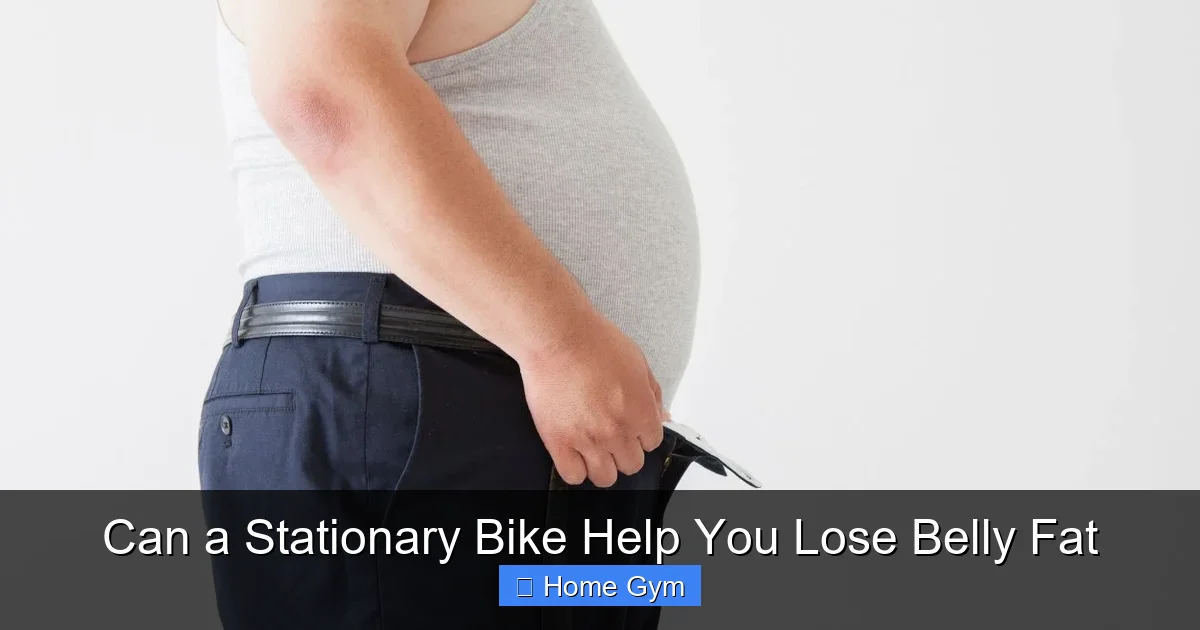
Before we talk solutions, we need to understand the enemy. Not all belly fat is created equal, and knowing the difference explains why certain exercises, like biking, are so effective.

Visual guide about Can a Stationary Bike Help You Lose Belly Fat
Image source: nchc.org
Subcutaneous vs. Visceral Fat: The Critical Difference
You have two main types of fat in your abdominal area:
- Subcutaneous Fat: This is the soft, pinchable fat sitting just under your skin. It’s the “muffin top” you can grab. While many dislike its appearance, it’s relatively harmless metabolically.
- Visceral Fat: This is the deep, hard fat that wraps around your internal organs—liver, pancreas, intestines. You can’t see or pinch it, but it’s the dangerous kind. High levels of visceral fat are strongly linked to insulin resistance, heart disease, type 2 diabetes, and certain cancers. This is the primary fat you should want to lose for health reasons.
Here’s the good news: aerobic exercise like stationary biking is exceptionally effective at reducing visceral fat. Studies consistently show that regular cardio, especially at moderate to vigorous intensities, preferentially mobilizes and burns this metabolically active fat. So, while you might be motivated by a flatter stomach, your biking routine is doing a massive service for your long-term health by attacking visceral fat first.
The Myth of “Spot Reduction”
Let’s kill this myth right now. You cannot do a specific exercise to “burn fat off your belly.” When you exercise, your body draws on its fat stores systemically, not locally. Where you lose fat first is largely determined by genetics, hormones, and sex (men tend to store more viscerally, women more subcutaneously in hips/thighs). Therefore, your goal with the stationary bike is not to “work your belly” directly, but to create a body-wide fat-burning environment where your genetics eventually decide to release that stubborn abdominal fat.
How a Stationary Bike Attacks Belly Fat: The Mechanisms
So, if the bike doesn’t target your abs directly, how does it work? It’s a powerful triple-threat:

Visual guide about Can a Stationary Bike Help You Lose Belly Fat
Image source: nchc.org
1. The Calorie Torch: Creating a Deficit
Fat loss is simple physics: calories in must be less than calories out. A vigorous 30-minute session on a stationary bike can burn anywhere from 300-600+ calories, depending on your weight, intensity, and bike type (spin bike vs. recumbent). This significant calorie expenditure directly contributes to your daily deficit. Over weeks and months, that deficit compounds, forcing your body to metabolize stored fat for energy.
2. The Metabolic Boost: Afterburn Effect (EPOC)
High-Intensity Interval Training (HIIT) on a stationary bike—short bursts of all-out effort followed by recovery—triggers something called Excess Post-Exercise Oxygen Consumption (EPOC). Your body works hard to repay its “oxygen debt” and recover, keeping your metabolism elevated for hours after you’ve stopped pedaling. This means you continue burning extra calories (and fat) at an increased rate long after your workout is done. This is a key strategy for breaking through plateaus.
3. The Muscle Builder: Preserving & Building Lean Mass
When in a calorie deficit, your body can burn both fat and muscle. Losing muscle is bad news; it slows your metabolism. The resistance provided by the bike’s tension, especially during hill climbs or high-resistance sprints, provides a strength stimulus for your quadriceps, hamstrings, glutes, and calves. Preserving and even building this lean muscle mass helps maintain your Basal Metabolic Rate (BMR), ensuring you burn more calories at rest. A higher BMR makes managing your weight and losing fat easier in the long run.
Crafting Your Belly-Fat-Burning Bike Workouts
Not all bike sessions are created equal. To maximize fat loss, you need a strategic mix. Ditch the “same slow ride every day” approach.
Visual guide about Can a Stationary Bike Help You Lose Belly Fat
Image source: nchc.org
The Power Duo: Steady-State & HIIT
For optimal results, blend these two primary cardio modalities:
- Steady-State Endurance (LISS): These are your longer (45-60 min), moderate-intensity rides where you maintain a consistent, “can talk but not sing” pace (60-70% max heart rate). This builds aerobic capacity, burns a high total number of calories during the session, and is fantastic for recovery days. It’s the workhorse for calorie burn.
- High-Intensity Interval Training (HIIT): These are shorter (20-30 min), brutal, and efficient. Think 30-60 seconds of near-maximal effort (85-95% max HR) with equal or slightly longer recovery periods. HIIT maximizes EPOC, improves insulin sensitivity (key for managing belly fat storage), and saves time. Example: 10 rounds of 45-second sprint / 75-second easy pedal.
Sample Weekly Plan: 3 days of HIIT (e.g., Tues, Thurs, Sat), 2 days of Steady-State (Mon, Fri), and 1-2 days of active recovery (very light 20-min spin) or rest.
Progressive Overload: Don’t Let Your Body Adapt
Your body is smart. If you do the same 30-minute ride at the same resistance every Tuesday, it will adapt, become efficient, and burn fewer calories. You must progressively challenge it. Each week, aim to do one of the following: increase total time, increase average resistance, increase sprint intervals in a HIIT session, or increase your average RPM (revolutions per minute). This constant nudge is what drives continued adaptation and fat loss.
Don’t Neglect the Core: Engage While You Pedal
While biking isn’t a direct ab sculptor, you can actively engage your core to stabilize your body, protect your lower back, and get a mild isometric workout. As you pedal, especially out of the saddle on a spin bike, gently pull your navel toward your spine. Maintain a stable, non-swaying torso. This turns every pedal stroke into a core-stability challenge, strengthening the muscles that support a flatter midsection.
The Non-Negotiable Partner: Nutrition for Belly Fat Loss
I cannot stress this enough: you cannot out-exercise a bad diet. The stationary bike creates the demand for fat loss; your diet supplies the conditions. You could burn 500 calories on the bike, but one large sugary latte and a cookie erase that effort in an instant. Belly fat loss, in particular, is highly sensitive to dietary choices.
Calorie Deficit: The Golden Rule
Use a TDEE (Total Daily Energy Expenditure) calculator online to estimate your maintenance calories. Subtract 300-500 calories from that number for a sustainable, moderate deficit. Track your intake honestly for a week using an app like MyFitnessPal to see where you truly stand. The bike helps you create part of this deficit; your food choices create the rest.
Prioritize Protein & Fiber
- Protein: Aim for 0.7-1g per pound of target body weight. Protein preserves lean muscle (critical for metabolism), increases satiety (you feel fuller longer), and has a higher thermic effect (your body burns more calories digesting it). Include lean sources like chicken, fish, eggs, tofu, and legumes in every meal.
- Fiber (especially soluble fiber): This is a belly-fat-fighting superstar. Soluble fiber slows digestion, stabilizes blood sugar (preventing insulin spikes that promote fat storage), and feeds your good gut bacteria. Load up on vegetables, fruits (berries, apples), oats, and beans.
Slash Sugar & Refined Carbs
This is your #1 dietary target for losing belly fat. Liquid sugar (soda, juice, fancy coffee drinks) and refined carbs (white bread, pastries, most cereals) cause rapid blood sugar and insulin spikes. Chronically high insulin signals your body to store fat, especially viscerally. By cutting these out, you give your body a clear signal to burn stored fat for fuel. The energy you gain from your biking will feel more stable without these sugar crashes.
Debunking Myths & Setting Realistic Expectations
Let’s clear the air on common misconceptions that derail motivation.
Myth: “My stationary bike will give me a six-pack.”
False. Your abdominal muscles (rectus abdominis, obliques) are underneath your subcutaneous fat. No amount of biking will reveal them if they’re buried under a layer of fat. The bike helps reduce the layer; resistance training (like planks, cable crunches) and adequate protein help build and define the muscle underneath. A combination is best for a truly toned midsection.
Myth: “I only need to do ab exercises to lose belly fat.”
This is the spot-reduction myth repackaged. Crunches burn negligible calories. They strengthen muscle but do little for the fat covering it. Biking is a far more efficient metabolic tool for fat loss. Do core work for strength and posture, but rely on cardio and diet for fat loss.
Setting a Realistic Timeline
How fast will you see results? It depends. A safe, sustainable fat loss rate is 0.5-1% of body weight per week. For someone with 20 lbs to lose, that’s 1-2 lbs per week. Belly fat is often the last to budge. You may see changes in your face, arms, or legs first. Be patient. Measure progress with a tape measure (waist circumference), how clothes fit, and progress photos—the scale is a liar, especially when you’re building muscle from biking. Consistency for 8-12 weeks is where you’ll see noticeable changes in your waistline.
Conclusion: Your Path to a Trimmer Midsection Starts Here
So, can a stationary bike help you lose belly fat? Absolutely. It is a cornerstone piece of home gym equipment for a reason. It provides a highly effective, joint-friendly, and convenient method to burn calories, slash dangerous visceral fat, and boost your overall metabolism. The science is clear: consistent aerobic exercise is one of the best weapons against abdominal fat.
But remember, the bike is a tool, not a miracle. Your success will be determined by the strategy behind your rides (mixing HIIT and steady-state), the progression you apply, and above all, the discipline you bring to your nutrition. Ditch the sugary drinks, prioritize protein and vegetables, and pedal with purpose. Combine the relentless calorie burn of your stationary bike with a mindful diet, and you will create the perfect storm for fat loss. That stubborn belly fat will eventually have to surrender. Your journey to a healthier, flatter midsection isn’t just possible—it’s absolutely within your power, starting with your next pedal stroke.
Frequently Asked Questions
Can I lose belly fat by just using a stationary bike without changing my diet?
It’s highly unlikely. While biking creates a calorie deficit, diet controls the majority of your calorie intake. Without addressing your nutrition, you’ll likely consume more calories than you burn, preventing fat loss. For meaningful belly fat reduction, you must combine biking with a slight, sustainable calorie deficit from whole foods.
How often should I use my stationary bike to see belly fat loss results?
Aim for at least 4-5 sessions per week, totaling 150-300 minutes of moderate-intensity exercise. This should include a mix of HIIT and steady-state rides. Consistency over months is what drives measurable fat loss, not occasional extreme efforts. Pair this with 1-2 days of strength training for best results.
How long will it take to notice a difference in my waistline?
This varies greatly based on starting body fat, genetics, diet, and workout consistency. Most people begin to see subtle changes in how clothes fit and minor reductions in waist circumference within 4-8 weeks of consistent effort. Significant, visible changes typically take 12+ weeks of dedicated work. Track measurements, not just the scale.
Should I combine stationary biking with other exercises?
Yes, absolutely. While biking is excellent for cardio and leg strength, adding 2-3 days of full-body resistance training (weight lifting, bodyweight exercises) is ideal. Building muscle overall increases your resting metabolism, helping you burn more calories 24/7 and creating a more balanced, toned physique as you lose fat.
Is HIIT on a stationary bike better for belly fat than long, slow rides?
They serve different but complementary purposes. HIIT is more time-efficient and creates a greater metabolic afterburn (EPOC), which can be superior for fat oxidation. Long, slow rides burn more total calories during the session and build endurance. The most effective approach uses both: HIIT for metabolic spike and efficiency, and steady-state for high calorie burn and recovery.
I’m a beginner. Is a stationary bike suitable for me to start losing belly fat?
Yes, it’s one of the best starting points. It’s low-impact, easy on the joints, and you can control the pace and resistance perfectly. Start with 20-30 minutes of comfortable, steady pedaling at a resistance that feels like a 5-6 out of 10 effort. Focus on building the habit first. As your fitness improves, gradually increase time and intensity.