How to Do Rear Delt Fly with Dumbbells
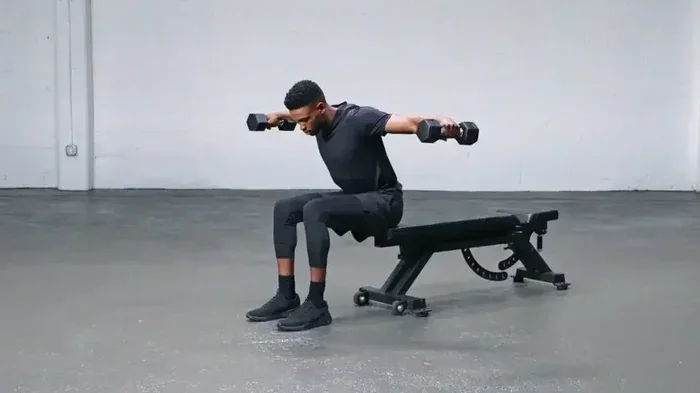
The rear delt fly with dumbbells is one of the best exercises for building strong, rounded shoulders. This guide covers proper form, common mistakes, and variations for all fitness levels. You will learn how to target the posterior deltoid effectively and safely.
Key Takeaways
- Correct Form Is Everything: Proper technique ensures you hit the rear delts and avoid injury.
- Multiple Variations Exist: Standing, bent-over, and seated versions all work the rear delts differently.
- Start Light: Using too much weight is the #1 mistake people make with this exercise.
- Mind-Muscle Connection Matters: Focusing on the rear delts boosts muscle activation significantly.
- Frequency and Volume Count: Training rear delts 2-3 times per week with moderate volume yields the best results.
- Pair With Other Shoulder Work: Combining rear delt flies with other dumbbell shoulder exercises creates balanced development.
📑 Table of Contents
How to Do Rear Delt Fly with Dumbbells
The rear delt fly with dumbbells is a must-have exercise in any shoulder workout. It targets the posterior deltoid, the muscle on the back of your shoulder. Strong rear delts improve your posture, balance your shoulder development, and reduce injury risk. Many lifters skip this exercise, and it shows in their overall physique.
Whether you are a beginner or a seasoned lifter, mastering the rear delt fly can take your shoulder training to the next level. This exercise is simple, effective, and requires nothing more than a pair of dumbbells. You can do it at home or in the gym.
In this guide, we will walk you through every detail. You will learn proper form, common mistakes, helpful variations, and programming tips. By the end, you will know exactly how to add the rear delt fly into your routine for maximum results.
Why the Rear Delt Fly Matters
Your shoulders are made up of three main muscles: the anterior (front), lateral (side), and posterior (rear) deltoids. Most people focus heavily on the front and side delts. The rear delt gets ignored. This creates an imbalance that can lead to poor posture and shoulder problems.
The rear delt fly specifically targets the posterior deltoid. This muscle plays a key role in shoulder extension and external rotation. It also helps stabilize your shoulder joint during pulling movements like rows and deadlifts. Without strong rear delts, your upper body lacks complete development.
Benefits of Rear Delt Flyes
- Better Posture: Strong rear delts pull your shoulders back and counteract desk-job slouching.
- Balanced Shoulder Development: Building all three delt heads creates that classic rounded shoulder look.
- Injury Prevention: Strong rear delts support the rotator cuff and reduce the risk of shoulder impingement.
- Improved Pulling Strength: The rear delt assists in movements like rows and pull-ups.
- Easy to Learn: The movement pattern is simple and beginner-friendly.
If you are looking for more dumbbell exercises to round out your routine, check out our guide on the best exercises to do with dumbbells.
Muscles Worked During the Rear Delt Fly
Understanding which muscles you are working helps you focus better during the exercise. The primary target is the posterior deltoid. But several other muscles assist and stabilize throughout the movement.
Primary Muscle: Posterior Deltoid
The posterior deltoid is the main muscle you are training. It sits at the back of your shoulder and is responsible for moving your arm backward. During the rear delt fly, this muscle contracts as you raise the dumbbells out to the sides.
Secondary Muscles
- Teres Minor and Major: These rotator cuff muscles assist in shoulder rotation and stability.
- Infraspinatus: Another rotator cuff muscle that helps with external rotation.
- Trapezius (Upper): Stabilizes the shoulder blades during the movement.
- Rhomboids: Help retract the shoulder blades, especially in the bent-over position.
- Erector Spinae: Supports your lower back when you are in a bent-over stance.
If you want to learn more about training the smaller shoulder muscles, our article on training teres minor and major with dumbbells is a great resource.
Step-by-Step Form Guide
Proper form is the single most important factor in the rear delt fly. Getting it right ensures maximum muscle activation and protects your shoulders. Follow these steps carefully.
Standing Rear Delt Fly
- Grab a pair of light dumbbells. Start with a weight you can control for 12-15 reps.
- Stand tall with feet shoulder-width apart. Keep a slight bend in your knees.
- Hinge forward at the hips. Your torso should be at about a 45-degree angle. Keep your back straight.
- Let the dumbbells hang straight down. Arms should be fully extended, palms facing each other.
- Raise the dumbbells out to the sides. Keep a slight bend in your elbows. Lead with your elbows, not your hands.
- Squeeze your rear delts at the top. Pause for one second when your arms are parallel to the floor.
- Lower the dumbbells slowly. Control the descent back to the starting position.
Key Form Cues
- Keep your neck neutral. Do not crane your head up or let it droop.
- Do not swing the dumbbells. Use controlled, deliberate movements.
- Keep your elbows slightly bent. A soft lock prevents joint strain.
- Avoid shrugging your shoulders. Keep them pulled down and back.
- Breathe out on the lift, breathe in on the way down.
Many people wonder about dumbbell weight selection. If you cannot complete the movement with proper form, the weight is too heavy. Light and controlled always wins over heavy and sloppy.
Common Mistakes to Avoid
The rear delt fly looks simple, but small errors can reduce its effectiveness or cause injury. Watch out for these mistakes.
Using Too Much Weight
This is the number one mistake. Heavy weights cause you to swing and use momentum instead of muscle. Your rear delts will not get properly activated. Choose a weight that allows you to feel the burn in the back of your shoulders.
Rounding the Upper Back
When your upper back rounds, you lose tension on the rear delts. It also puts unnecessary stress on your spine. Keep your chest up and your back flat throughout the movement.
Lifting Too High
Raising the dumbbells above shoulder level shifts the work to the trapezius. You want the movement to stay focused on the rear delts. Stop when your arms are parallel to the floor.
Using Momentum
Swinging the dumbbells or jerking your body forward takes the work away from the target muscle. Slow and steady is the way to go. If you find yourself swinging, reduce the weight.
Neglecting the Negative Phase
The lowering portion of the rep is just as important as the lift. Control the dumbbells back down for 2-3 seconds. This increases time under tension and promotes better muscle growth.
Variations of the Rear Delt Fly
Adding variety to your workouts keeps things interesting and challenges the muscles from different angles. Here are some effective rear delt fly variations.
Bent-Over Rear Delt Fly
This is the classic version where you bend at the waist with a flat back. It places a strong stretch on the posterior deltoid. You can do this with both arms at the same time or one arm at a time.
Seated Rear Delt Fly
Sit on a bench with a slight incline and let your chest rest against the pad. This eliminates lower back strain and prevents you from using momentum. It is an excellent option for people with lower back issues.
Incline Bench Rear Delt Fly
Set an incline bench to about 30-45 degrees. Lie face down and let the dumbbells hang. This variation provides a deep stretch on the rear delts at the bottom of the movement.
Single-Arm Rear Delt Fly
Perform the exercise one arm at a time. This helps you identify and fix strength imbalances. It also allows you to focus more on the mind-muscle connection.
Programming Tips for Rear Delt Flyes
Knowing how to do the exercise is only half the battle. You also need to train it smart. Here are some programming tips to get the best results.
How Often Should You Train Rear Delts?
Train your rear delts 2-3 times per week. They are a smaller muscle group, so they recover quickly. You can add rear delt flies to your upper body or shoulder days.
Sets and Reps
- Hypertrophy: 3-4 sets of 12-15 reps.
- Strength: 3-4 sets of 8-10 reps with slightly heavier weight.
- Endurance: 3-4 sets of 15-20 reps with lighter weight.
Rest Between Sets
Rest 60-90 seconds between sets. This keeps the intensity high while allowing enough recovery for the rear delts to perform well in each set.
Pair With Other Exercises
The rear delt fly pairs well with other shoulder exercises like lateral raises and front raises. You can also superset it with rows for an effective upper body circuit. If you are following a full dumbbell workout, the rear delt fly fits perfectly as a finisher.
For a complete home workout plan, check out our guide on how to workout with dumbbells at home for beginners.
Tips for Maximizing Your Results
Follow these tips to get the most out of your rear delt fly training.
- Focus on the mind-muscle connection. Think about squeezing the rear delt at the top of each rep.
- Use a slow tempo. A 2-1-2 or 3-1-2 tempo works well for this exercise.
- Warm up your shoulders first. Do some light band pull-aparts or arm circles before loading up the dumbbells.
- Track your progress. Keep a log of your sets, reps, and weights to ensure you are progressing over time.
- Be patient. Rear delts are small muscles. Visible changes take time and consistent effort.
- Prioritize form over everything. Perfect reps with light weight beat sloppy reps with heavy weight every time.
If you are interested in building bigger shoulders overall, our article on how to get bigger shoulders at home with dumbbells covers additional exercises and strategies.
Conclusion
The rear delt fly with dumbbells is a simple yet incredibly effective exercise for building strong, balanced shoulders. It targets the often-neglected posterior deltoid and improves both your physique and functional strength. By following the form cues, avoiding common mistakes, and programming the exercise correctly, you will see real results.
Start with a light weight, focus on technique, and gradually increase the load over time. Consistency is key. Add this exercise to your routine 2-3 times per week, and your rear delts will grow stronger and more defined.
Now that you know how to do the rear delt fly properly, it is time to put it into action. Grab a pair of dumbbells, hinge forward, and start building those rear delts today. Your shoulders will thank you.
Frequently Asked Questions
What weight should I use for rear delt flies?
Start with a light to moderate weight that you can control for 12-15 reps. The rear delt is a small muscle, so it does not need heavy weight. Focus on feeling the muscle work rather than lifting the heaviest dumbbell you can find.
Can I do rear delt flies every day?
It is best to train rear delts 2-3 times per week. Like any muscle group, they need rest to recover and grow. Daily training with high volume can lead to overuse and fatigue. Stick to a balanced schedule for the best results.
Are rear delt flies better than reverse pec deck?
Both exercises target the rear delts effectively. Rear delt flies with dumbbells offer more freedom of movement and engage stabilizer muscles. The reverse pec deck provides more isolation and support. Both have their place in a well-rounded program.
Why do my traps hurt during rear delt flies?
Trap pain usually means you are using too much weight or shrugging your shoulders during the movement. Keep your shoulders down and back, use a lighter weight, and focus on squeezing the rear delts instead of the traps.
Can beginners do rear delt flies with dumbbells?
Absolutely. The rear delt fly is one of the most beginner-friendly shoulder exercises. Start with very light dumbbells, learn the movement pattern, and focus on form. Once you feel comfortable, you can gradually increase the weight over time.
Should I do rear delt flies before or after my main shoulder exercises?
It is best to do rear delt flies after your heavy compound movements like overhead presses. This way, your larger muscles are already fatigued, and you can focus on isolating the rear delts with proper form and mind-muscle connection.