How to Get Bigger Biceps with Light Dumbbells
You don’t need heavy weights to build bigger biceps. Using light dumbbells with the right techniques can deliver serious bicep growth and impressive arm gains. This guide covers proven exercises, training tips, and common mistakes to help you pack on muscle with lightweight dumbbell training.
Light dumbbells are secretly one of the best tools for building bigger biceps. Many people think they need heavy weights to grow their arms. But that’s not true at all. You can get amazing bicep growth using just a pair of light dumbbells and the right approach.
Whether you’re a beginner, recovering from an injury, or training at home with limited equipment, light dumbbell bicep exercises can deliver real results. The secret lies in how you train, not just how much you lift. In this guide, we’ll walk you through everything you need to know about building bigger biceps with light dumbbells.
Key Takeaways
- Light dumbbells work: You can build bigger biceps without heavy weights by using proper technique and higher reps.
- Time under tension matters: Slow, controlled reps with light dumbbells create the same muscle stimulus as heavy lifting.
- Variety is key: Mixing different curl variations targets all parts of your biceps for balanced growth.
- Progressive overload applies to light weights too: Increase reps, sets, or decrease rest time to keep challenging your muscles.
- Form beats weight: Poor form with heavy dumbbells leads to injury. Perfect form with light weights builds better muscle.
- Consistency wins: Sticking to a regular bicep routine with light dumbbells delivers real results over time.
📑 Table of Contents
Why Light Dumbbells Work for Bicep Growth
It might sound counterintuitive. How can a light weight build big muscles? The answer comes down to muscle tension and time under load. When you use lighter dumbbells and perform slow, controlled reps, your biceps stay under tension longer. This creates the same kind of muscle damage and metabolic stress that heavy weights do.
Research shows that hypertrophy (muscle growth) happens when muscles experience enough mechanical tension. Heavy weights aren’t the only way to achieve this. Slow tempo, full range of motion, and high rep counts with lightweight dumbbells can trigger the same growth response.
The Science Behind Light Weight Training
Your muscles don’t care whether the weight is heavy or light. They care about the work being done. When you perform a curl with a light dumbbell and focus on the squeeze at the top, you’re activating the same muscle fibers as a heavy curl. The difference is in how you recruit them.
With heavy weights, you rely more on fast-twitch fibers. With light weights and high reps, you engage both fast-twitch and slow-twitch fibers. This broader activation leads to more complete bicep development over time.
Benefits of Using Light Dumbbells
- Lower injury risk: Light weights put less stress on your joints and tendons.
- Better form: You can focus on perfect technique without struggling under heavy loads.
- Home-friendly: Light dumbbells take up less space and work great for home workouts.
- Higher volume: You can do more reps and sets without exhausting yourself too quickly.
- Great for beginners: If you’re just starting your fitness journey, light dumbbells are the perfect starting point.
Best Bicep Exercises with Light Dumbbells
Not all bicep exercises are created equal. Some target the long head of the bicep, which creates that coveted peak. Others hit the short head for that thick, full look. Here are the best exercises you can do with light dumbbells to build bigger arms.
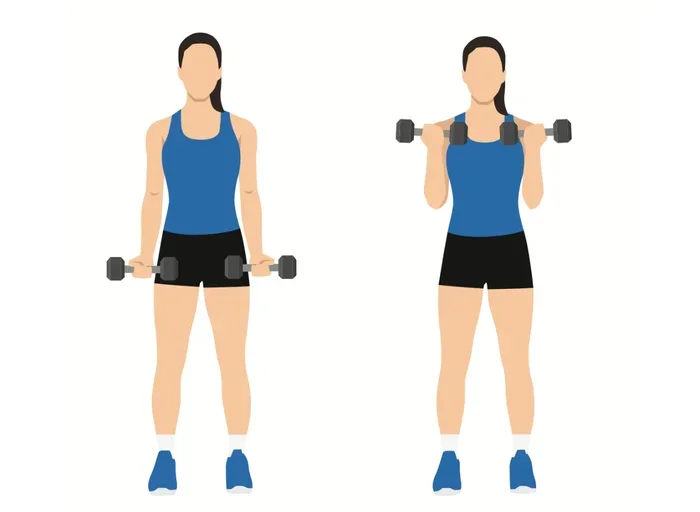
Standing Dumbbell Curl
The standing dumbbell curl is the foundation of any bicep workout. Hold a light dumbbell in each hand, arms fully extended at your sides. Curl both weights up slowly, squeezing your biceps at the top. Lower them back down with control. Don’t swing your body or use momentum.
Focus on a 3-second lift, a 1-second squeeze, and a 3-second lower. This time under tension is what makes light weights effective. Aim for 3 to 4 sets of 12 to 15 reps.
Hammer Curl
The hammer curl targets the brachialis muscle, which sits underneath your bicep. This exercise makes your arms look wider and more defined. Hold the dumbbells with a neutral grip (palms facing each other) and curl them up slowly.
This movement also builds forearm strength and improves your grip. It’s one of the most underrated light dumbbell exercises for arm growth. Include it in every bicep workout routine.
Concentration Curl
The concentration curl isolates your bicep like nothing else. Sit on a bench or chair, spread your legs, and rest your elbow against your inner thigh. Curl the dumbbell up slowly and hold the peak contraction for a full second.
This exercise is perfect for creating that bicep peak many people chase. Use light dumbbells and focus on the mind-muscle connection. You’ll feel the burn in a way that heavy weights sometimes don’t allow.
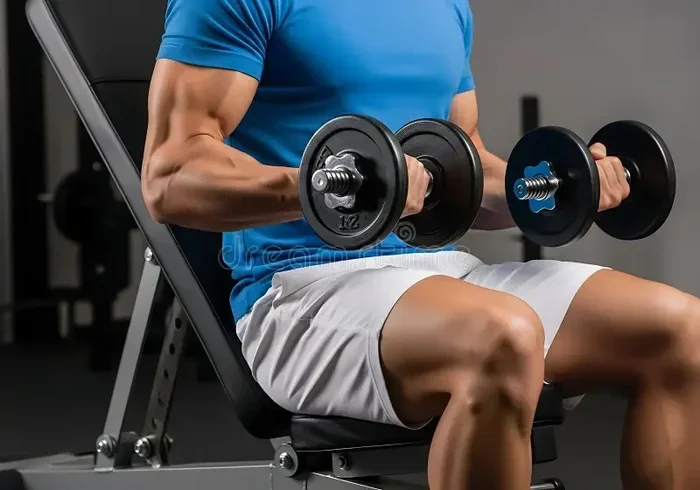
Incline Dumbbell Curl
Set an incline bench to about 45 degrees. Sit back and let your arms hang straight down. This position puts your biceps under a deep stretch at the bottom of the curl, which is incredibly effective for growth.
Use a light to moderate weight and focus on the stretch at the bottom. This exercise hits the long head of the bicep hard. It’s one of the most effective light dumbbell exercises for building arm size.
Zottman Curl
The Zottman curl is a two-part movement that works both the bicep and the forearm. Curl the dumbbells up with palms facing up, then rotate your wrists so palms face down at the top. Lower the weights slowly in this reversed position.
This exercise builds arm definition and gives you that coveted bicep pump. It’s a great finisher for your arm workout routine. Use light dumbbells since the rotation and slow lowering make this quite challenging.
Training Strategies for Maximum Bicep Growth
Doing the right exercises is only half the battle. How you structure your training determines whether your biceps grow or stay the same. Here are proven strategies to maximize your results with light dumbbells.
Use Progressive Overload
Progressive overload means gradually increasing the demands on your muscles over time. You can’t always add more weight with light dumbbells. So here’s what you can do instead:
- Add more reps: If you did 12 reps last week, try 15 this week.
- Add more sets: Go from 3 sets to 4 sets per exercise.
- Reduce rest time: Cut rest between sets from 60 seconds to 45 seconds.
- Slow down the tempo: Make each rep take 5 seconds instead of 3.
- Add a pause: Hold the top of each curl for 2 seconds before lowering.
These methods keep your muscles challenged even when the weight stays the same. Progressive overload is the most important principle in muscle building, period.
Focus on Time Under Tension
Time under tension (TUT) refers to how long your muscles are working during each set. The longer your biceps are under strain, the more growth signals your body sends.
With light dumbbells, aim for each rep to take at least 4 to 5 seconds. That means 2 seconds up, 1 second squeeze, and 2 seconds down. This slow pace makes a 15-pound dumbbell feel much heavier. Your bicep growth will thank you for it.
Train Biceps 2 to 3 Times Per Week
Your biceps are a smaller muscle group. They recover faster than your legs or back. This means you can train them more frequently without overtraining.
For the best results, hit your biceps 2 to 3 times per week with at least one rest day between sessions. Each session should last about 15 to 20 minutes. Keep the volume moderate and the intensity high through technique and tempo.
Pair Biceps with Back Day
Biceps are a pulling muscle. They get plenty of work during back exercises like rows and pull-ups. So it makes sense to train them on the same day as your back.
This approach saves time and ensures your biceps are fresh enough to handle direct work afterward. If you train back and biceps together, do your heavy back exercises first, then move to your bicep exercises.
Common Mistakes to Avoid
Even with light dumbbells, you can make mistakes that hold back your bicep growth. Here are the most common ones and how to fix them.
Using Momentum Instead of Muscle
This is the number one mistake people make with curls. You swing your body, use a jerking motion, and barely feel your biceps working. The weight moves, but your muscles don’t.
To fix this, sit down during your curls. Seated curls eliminate body English completely. If you must stand, keep your back against a wall. This forces your biceps to do all the work.
Cutting the Range of Motion Short
Partial reps are tempting when the weight feels too light. But you miss out on the stretch and contraction that drive muscle growth. Always lower the dumbbell fully until your arm is straight. Always curl all the way up until the dumbbell nearly touches your shoulder.
Full range of motion is non-negotiable. It’s one of the biggest differences between effective bicep training and wasted effort.
Neglecting the Negative (Eccentric) Phase
The lowering portion of a curl is just as important as the lifting portion. The eccentric phase causes more muscle damage, which triggers growth and repair.
Take 3 to 4 seconds to lower each dumbbell. Resist the urge to let gravity do the work. This simple change will transform your light dumbbell bicep workouts.
Training Too Often Without Rest
More is not always better. Your muscles grow during rest, not during the workout. If you train your biceps every single day with light dumbbells, you’ll actually stall your progress.
Give your biceps at least 48 hours of rest between sessions. Sleep well, eat enough protein, and let your body recover. Rest is part of the training process.
Skipping the Mind-Muscle Connection
With light weights, it’s easy to go on autopilot. But the mind-muscle connection is incredibly powerful. When you actively think about your biceps contracting during each rep, you recruit more muscle fibers.
Before each set, take a moment to visualize your biceps working. Feel the squeeze at the top. This mental focus makes a real difference in the quality of your lightweight training sessions.
Sample Light Dumbbell Bicep Workout
Here’s a complete bicep workout you can do at home with just a pair of light dumbbells. Perform this routine 2 to 3 times per week with at least one rest day between sessions.
Warm-Up (3 minutes): Arm circles, light stretching, and 20 seconds of fast-paced curls with no weight.
- Standing Dumbbell Curl — 3 sets of 12 to 15 reps, 3 seconds up, 3 seconds down
- Hammer Curl — 3 sets of 12 to 15 reps, controlled tempo
- Incline Dumbbell Curl — 3 sets of 10 to 12 reps, focus on the stretch
- Concentration Curl — 2 sets of 12 to 15 reps per arm, 2-second squeeze at top
- Zottman Curl — 2 sets of 10 to 12 reps, slow rotation at the top
Cool-Down (3 minutes): Gentle bicep stretches and deep breathing. Hold each stretch for 20 to 30 seconds.
This workout takes about 20 minutes. It targets all parts of your biceps and forearms. As you get stronger, add reps or sets before considering heavier weights. You’d be surprised how much bicep growth you can achieve with this routine and a pair of light dumbbells.
Nutrition Tips for Bicep Growth
Training is only half the equation. What you eat plays a huge role in muscle building. Without proper nutrition, even the best bicep exercises won’t deliver the results you want.
Eat Enough Protein
Protein provides the building blocks your muscles need to repair and grow. Aim for about 0.7 to 1 gram of protein per pound of body weight each day. Good sources include chicken, fish, eggs, Greek yogurt, beans, and protein powder.
Don’t Skip Carbs
Carbohydrates fuel your workouts and help you recover faster. Eat complex carbs like oats, brown rice, sweet potatoes, and whole grain bread. They give you steady energy for your arm workouts.
Stay Hydrated
Muscles are about 75% water. Dehydration reduces performance and slows recovery. Drink water throughout the day, especially before and after your bicep training sessions.
Eat a Slight Caloric Surplus
To build muscle, you need to eat slightly more calories than you burn. A small surplus of 200 to 300 calories per day is ideal. This provides the extra energy your body needs to build new bicep tissue.
How to Track Your Progress
Tracking your progress keeps you motivated and helps you know if your approach is working. Here’s what to monitor:
- Rep counts: Are you doing more reps each week with the same weight?
- Arm measurements: Measure your arms every 2 to 4 weeks at the same time of day.
- Strength notes: Keep a workout log to track which exercises you did and how many sets and reps.
- Photos: Take progress photos every 4 weeks. The visual changes can be very motivating.
Progress with light dumbbells might be slower than with heavy weights, but it’s absolutely possible. Stay consistent, track your numbers, and trust the process.
When to Consider Heavier Weights
Light dumbbells are fantastic, but there comes a point where you may want to progress. If your bicep exercises feel too easy after several weeks, it’s time to challenge yourself.
Start by increasing the weight by just 1 to 2 pounds. Keep the same rep range and tempo. If that feels manageable after a few sessions, increase again. The goal is gradual, sustainable progressive overload.
You can also check out how to get bigger biceps at home with dumbbells for more training ideas. And if you want a complete arm-building routine, look at how to build arm muscles at home with dumbbells for a full program.
Final Thoughts
Building bigger biceps with light dumbbells is entirely possible. You don’t need heavy weights, a gym membership, or fancy equipment. All you need is consistency, proper technique, and a smart training plan.
Focus on slow, controlled reps. Hit every angle of your biceps. Eat enough protein and give your muscles time to recover. Follow the strategies in this guide and you’ll see real bicep growth in just a few weeks.
Remember, the best dumbbell bicep workout is the one you actually do consistently. Grab your light dumbbells, follow the sample workout above, and start building the arms you’ve always wanted. Your journey to bigger biceps starts today.
For more tips on building bigger arms, check out how to get bigger biceps and triceps with dumbbells to target both muscle groups together for maximum arm size.
Frequently Asked Questions
Can you really get bigger biceps with light dumbbells?
Yes, absolutely. Light dumbbells work when you use proper technique, slow tempos, and high reps. The key is time under tension and progressive overload, not just heavy weight.
How heavy should my dumbbells be for bicep growth?
Choose a weight that challenges you in the 12 to 15 rep range. You should feel a strong burn by the last few reps but still maintain good form. Light to moderate dumbbells work perfectly for this.
How often should I train my biceps with light dumbbells?
Train your biceps 2 to 3 times per week with at least one rest day between sessions. This frequency gives your muscles enough stimulus to grow while allowing proper recovery.
How long does it take to see bicep growth with light dumbbells?
Most people notice visible changes within 4 to 6 weeks of consistent training. Full results typically show up after 8 to 12 weeks. Consistency and proper nutrition make the biggest difference.
Should I do curls every day with light dumbbells?
No. Even with light weights, your muscles need rest to grow. Training biceps every day can lead to overtraining and actually stall your progress. Stick to 2 to 3 sessions per week.
What’s the best light dumbbell bicep exercise for beginners?
The standing dumbbell curl is the best starting point. It’s simple, effective, and teaches proper form. Once you master it, add hammer curls and concentration curls to your routine for balanced bicep development.
=== CONCLUSION ===
Building bigger biceps with light dumbbells is one of the most accessible and effective approaches to arm training. You don’t need expensive equipment or a gym membership. All you need is a pair of light dumbbells, a solid plan, and the consistency to stick with it.
Use the exercises, strategies, and tips from this guide to create a routine that works for you. Focus on slow, controlled movements, progressive overload, and proper nutrition. Your bicep growth is within reach. Start today and trust the process.