How to Use Dumbbells for Arms at Home
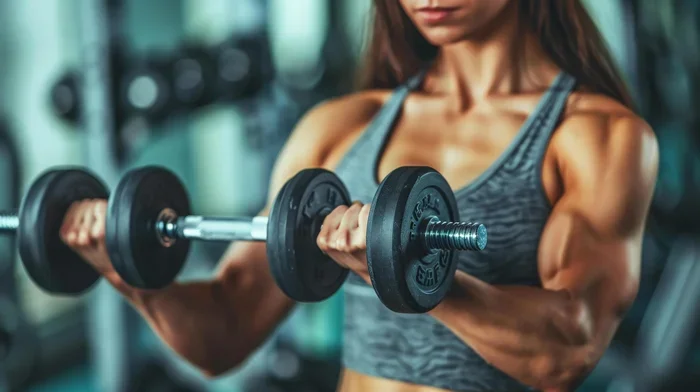
Using dumbbells for arms at home is one of the most efficient ways to build muscle, tone your upper body, and boost overall strength. This guide covers the best dumbbell arm exercises, proper form, and practical routines you can follow right now. You will learn how to target your biceps, triceps, and forearms with simple movements that deliver real results.
Let’s be honest. Not everyone has a fancy gym membership or a garage full of equipment. But almost everyone has a pair of dumbbells sitting in a corner, collecting dust. The truth is, dumbbells for arms at home can transform your fitness routine without costing you a fortune or taking up much space.
Whether you want bigger biceps, sculpted triceps, or stronger forearms, dumbbells give you exactly what you need. You do not need a personal trainer or a complicated machine. A few basic exercises, done consistently, can build noticeable arm muscle in just a few weeks. This guide walks you through everything you need to know, from the best exercises to common mistakes you should avoid.
Dumbbell arm exercises are popular for a reason. They are simple, effective, and easy to scale. Whether you are a complete beginner or someone looking to refresh your routine, you will find practical advice here. Let us dive into how you can build bigger, stronger arms using nothing more than a pair of dumbbells and a little bit of space.
Key Takeaways
- Dumbbells are versatile and affordable: They let you train every arm muscle from the comfort of your home.
- Proper form prevents injury: Focus on controlled movements rather than heavy weights to get the best results.
- Consistency matters more than intensity: A regular arm workout routine with dumbbells beats occasional heavy sessions.
- Progressive overload drives growth: Gradually increase weight or reps to keep your muscles challenged.
- Rest and recovery are essential: Your arm muscles need time to repair and grow after each session.
- Start simple and progress steadily: Begin with basic exercises and add complexity as you get stronger.
📑 Table of Contents
- Why Dumbbells Are Perfect for Arm Workouts at Home
- Best Dumbbell Exercises for Arms at Home
- How to Build an Effective Arm Workout Routine
- Common Mistakes to Avoid When Training Arms with Dumbbells
- Expert Insights on Dumbbell Arm Training
- How to Choose the Right Dumbbell Weight for Arm Exercises
- Conclusion
Why Dumbbells Are Perfect for Arm Workouts at Home
Dumbbells stand out as one of the best pieces of home gym equipment for arm training. Unlike barbells or machines, they allow each arm to work independently. This means you fix strength imbalances naturally over time. Your dominant arm cannot take over and do all the work.
Here is why dumbbells work so well for arm strength training at home:
- Versatility: One pair of dumbbells can target every muscle in your arms.
- Space efficiency: They fit in a closet or under a bed when not in use.
- Affordability: A decent set costs far less than a gym membership.
- Joint-friendly: Dumbbells allow natural movement patterns that reduce strain.
- Scalability: You can go from light toning to heavy muscle building with the same equipment.
Another big advantage is dumbbell workouts for beginners. You do not need to learn complex machinery. A simple curl or press is easy to understand and safe when done with proper form. This makes dumbbells the ideal starting point for anyone new to resistance training arms.
Understanding Your Arm Muscles
Before you start lifting, it helps to know what you are working on. Your arms have several major muscle groups. Each one responds to different types of movements.
Biceps: These are the front muscles of your upper arm. They handle pulling and curling movements. Most people focus on biceps because they are the most visible. But ignoring the other muscles is a mistake.
Triceps: These sit on the back of your upper arm. They make up about two-thirds of your arm mass. Strong triceps give your arms that full, toned look. Many people overlook them, which limits their progress.
Forearms: These muscles control your wrists and grip. They play a supporting role in almost every arm exercise. Strong forearms improve your performance in other lifts too.
Deltoids (shoulders): While not technically arm muscles, your shoulders play a huge role in arm appearance. Well-developed shoulders make your arms look bigger and more balanced.
Best Dumbbell Exercises for Arms at Home
Now let us get to the good stuff. These exercises target every part of your arm. You can do them with a single pair of dumbbells and minimal space. Each movement includes form tips to help you get the most out of it.
Bicep Exercises
Dumbbell Bicep Curls: Stand with your feet shoulder-width apart. Hold a dumbbell in each hand with your palms facing forward. Keep your elbows close to your sides. Slowly curl the weights up toward your shoulders. Lower them back down with control. This is the king of dumbbell bicep exercises. Do 3 sets of 10 to 12 reps.
Hammer Curls: Hold the dumbbells with your palms facing your body. Curl them up the same way as regular curls. This variation targets the brachialis muscle, which sits underneath the bicep. It adds thickness and width to your upper arm. Hammer curls are a must-add to any arm workout routine.
Concentration Curls: Sit on a chair and rest your elbow against your inner thigh. Curl the dumbbell up in a slow, controlled motion. This exercise isolates the bicep and eliminates swinging. It is perfect for building arm hypertrophy and mind-muscle connection.
Tricep Exercises
Overhead Tricep Extension: Hold one dumbbell with both hands behind your head. Keep your elbows close to your ears. Extend your arms upward until they are straight. Lower the weight back down slowly. This exercise targets the long head of the tricep, which is the largest portion. It is one of the most effective tricep dumbbell exercises you can do at home.
Dumbbell Kickbacks: Lean forward with a flat back. Hold a dumbbell in each hand with your elbows bent at 90 degrees. Extend your arms backward until they are straight. Squeeze your triceps at the top. Dumbbell kickbacks are simple but incredibly effective for building the back of your arm.
Close-Grip Floor Press: Lie on the floor with a dumbbell in each hand. Keep your hands close together, directly above your shoulders. Press the weights up and lower them slowly. This hits the triceps hard while also engaging your chest. It is a great compound movement for upper body strength.
Forearm Exercises
Wrist Curls: Sit on a chair and rest your forearms on your thighs. Hold a dumbbell in each hand with your palms facing up. Curl your wrists up and lower them slowly. This directly strengthens the forearm muscles and improves your grip.
Reverse Wrist Curls: Perform the same movement but with your palms facing down. This targets the extensor muscles on the top of your forearm. Balanced forearm development prevents injuries and improves performance in other lifts.
How to Build an Effective Arm Workout Routine
Having the right exercises is only half the battle. You also need a structured routine. A good arm workout routine balances volume, intensity, and recovery. Here is how to put it all together.
Beginner Arm Routine (3 Days Per Week)
Start with this simple routine if you are new to training. Perform it on non-consecutive days to allow proper recovery.
- Dumbbell Bicep Curls: 3 sets of 10-12 reps
- Overhead Tricep Extension: 3 sets of 10-12 reps
- Hammer Curls: 3 sets of 10-12 reps
- Dumbbell Kickbacks: 3 sets of 10-12 reps
- Wrist Curls: 2 sets of 15 reps
Rest 60 to 90 seconds between sets. Use a weight that challenges you but still allows good form. As you get stronger, increase the weight gradually. This principle is called progressive overload, and it is the foundation of muscle growth.
Intermediate Arm Routine (4 Days Per Week)
Once you have built a base, you can increase the volume and intensity. Try splitting your arm work across two sessions.
Session A (Bicep Focus):
- Dumbbell Bicep Curls: 4 sets of 8-10 reps
- Hammer Curls: 3 sets of 10-12 reps
- Concentration Curls: 3 sets of 12 reps
- Wrist Curls: 3 sets of 15 reps
Session B (Tricep Focus):
- Overhead Tricep Extension: 4 sets of 8-10 reps
- Dumbbell Kickbacks: 3 sets of 10-12 reps
- Close-Grip Floor Press: 3 sets of 10 reps
- Reverse Wrist Curls: 3 sets of 15 reps
Alternate between Session A and Session B on different days. Always leave at least one rest day between sessions. Your muscles grow during rest, not during the workout itself.
Common Mistakes to Avoid When Training Arms with Dumbbells
Even the best exercises can fail if you make basic mistakes. Avoiding these errors will save you time, frustration, and potential injury.
Using Too Much Weight: This is the number one mistake beginners make. Swinging heavy dumbbells around ruins your form and reduces muscle activation. Choose a weight where you can complete all reps with clean control. You can always increase the weight later.
Skipping the Triceps: Many people spend all their time on biceps and ignore the triceps. Since triceps make up most of your arm mass, this limits your overall growth. A balanced bicep and tricep workout is essential for proportional arm development.
Rushing Through Reps: Speed kills gains. Slow, controlled reps create more tension on the muscle fibers. Take 2 to 3 seconds on the way up and 2 to 3 seconds on the way down. This simple change can dramatically improve your results.
Neglecting Forearms: Strong forearms improve your grip and support bigger lifts. They also give your arms a more complete, athletic look. A few wrist curl sets at the end of each workout go a long way.
Overtraining: More is not always better. Your arm muscles are relatively small and recover quickly, but they still need rest. Training them every single day without rest will lead to burnout and stalled progress. Aim for 2 to 4 arm sessions per week depending on your level.
Quick Tips for Better Results
- Squeeze at the top: Pause for one second at the peak of each rep to maximize muscle contraction.
- Breathe properly: Exhale on the effort and inhale on the release.
- Track your progress: Write down your weights and reps to see improvements over time.
- Stay hydrated: Drink water before, during, and after your workout.
- Warm up first: Do 5 minutes of light movement before lifting heavy dumbbells.
Expert Insights on Dumbbell Arm Training
Training arms at home does not mean settling for less. Many professional athletes build impressive arms with nothing but dumbbells. The key is understanding how to train smart.
Focus on the Mind-Muscle Connection: Rather than just moving the weight, focus on feeling the muscle work. Visualize your biceps or triceps contracting with each rep. This mental focus increases muscle activation and leads to better growth. Studies show that lifters who practice mind-muscle connection gain more strength and size over time.
Vary Your Grip and Angle: Changing your hand position or body angle targets the same muscle from different directions. For example, turning your palms inward during curls shifts the emphasis slightly. This variety stimulates more muscle fibers and prevents plateaus.
Pair Compound and Isolation Movements: Compound movements like the close-grip floor press work multiple muscle groups. Isolation exercises like kickbacks target a single muscle. Combining both in your routine gives you the best of both worlds. You build overall strength while also carving definition into individual muscles.
Be Patient with Your Results: Arm growth takes time. You may not see dramatic changes in the first week. Stick with your routine, eat enough protein, and trust the process. Most people notice visible changes within 4 to 8 weeks of consistent training. If you want to understand the timeline better, check out how long it takes for dumbbells to work and set realistic expectations.
Remember that building arm muscles at home follows the same principles as any other training goal. Consistency, proper nutrition, and adequate sleep are just as important as the exercises themselves. Without recovery, your muscles cannot grow. Without fuel, they cannot repair.
For those who want to take their arm training further, learning how to get bigger arms at home with dumbbells provides additional strategies and exercise variations. The key is to keep challenging yourself while maintaining proper form and recovery habits.
How to Choose the Right Dumbbell Weight for Arm Exercises
Selecting the correct weight is crucial for making progress. Too light, and your muscles will not be challenged. Too heavy, and your form will suffer.
Start with a weight you can lift for 10 to 12 reps with good form. The last 2 reps should feel challenging but still doable. If you can easily complete 15 reps, the weight is too light. If you cannot finish 8 reps with proper technique, it is too heavy.
As you get stronger, increase the weight by 1 to 5 pounds at a time. Small increases add up over weeks and months. This gradual approach prevents injury and ensures steady progress. Understanding proper weight selection is essential for any dumbbell workout for beginners and remains important as you advance.
For guidance on choosing the right weights for different exercises, explore how to know what weight dumbbells to use. This resource covers weight selection principles across various exercises and fitness levels.
Conclusion
Using dumbbells for arms at home is one of the simplest and most effective ways to build stronger, more defined arms. You do not need expensive equipment or a gym membership. A pair of dumbbells, a little space, and consistent effort are all you need.
Focus on proper form above all else. Start with a routine that matches your level and gradually increase the challenge over time. Target all the muscles in your arms, including your biceps, triceps, forearms, and shoulders. Avoid common mistakes like using too much weight or skipping rest days.
The best arm workout is the one you actually do consistently. So grab your dumbbells, follow the exercises in this guide, and commit to showing up. Your arms will thank you. Start today, stay patient, and enjoy the journey of building stronger, more muscular arms right from the comfort of your own home.
Frequently Asked Questions
What is the best dumbbell exercise for arms at home?
The dumbbell bicep curl is widely considered the best starting point for arm training at home. It targets the biceps directly, requires minimal space, and is easy to learn. Pair it with overhead tricep extensions and hammer curls for a complete arm workout that covers all major muscle groups effectively.
How often should I train my arms with dumbbells at home?
Training your arms 2 to 4 times per week is ideal for most people. This frequency provides enough stimulus for muscle growth while allowing adequate recovery time. Start with 2 to 3 sessions per week and increase as your fitness level improves. Listen to your body and adjust accordingly.
Can I build big arms with just dumbbells at home?
Absolutely. Many people build impressive arm size using nothing but dumbbells at home. The key is consistent training, progressive overload, and proper nutrition. You do not need a gym or fancy machines. Focus on gradually increasing your weight or reps over time to continuously challenge your muscles.
How long does it take to see results from dumbbell arm exercises?
Most people begin to notice visible changes in their arm size and strength within 4 to 8 weeks of consistent training. Factors like your starting point, nutrition, sleep, and workout frequency all influence the timeline. Stay patient, track your progress, and trust the process even when results feel slow at first.
What weight dumbbells should I use for arm exercises?
Choose a weight that allows you to complete 10 to 12 reps with good form, where the last 2 reps feel challenging. For beginners, this might mean starting with 5 to 10 pound dumbbells. As you get stronger, gradually increase the weight by 1 to 5 pounds every few weeks to keep making progress.
Should I train biceps and triceps on the same day?
Yes, training both biceps and triceps in the same session is effective and efficient. These muscle groups are relatively small and recover quickly, so they can handle being trained together. Just make sure you include exercises for both sides of your arm in each workout for balanced development.