How to Do Rowing Exercise Without Machine 2

You can get an amazing rowing workout without any machine at all. This guide shows you exactly how to do rowing exercise without machine 2 using simple bodyweight moves, resistance bands, and household items. You will learn proper form, beginner-friendly routines, and pro tips to build strength and burn calories from home.
Rowing is one of the best full body workouts you can do. It hits your legs, back, arms, and core all at once. But what if you do not have a rowing machine? The good news is you can still get a fantastic rowing workout using simple techniques. This guide will walk you through exactly how to do rowing exercise without machine 2 in a way that feels natural and effective.
Whether you are a complete beginner or a seasoned athlete, these methods will help you build strength, improve endurance, and burn calories. You do not need fancy equipment. You just need a little know-how and the willingness to move. Let us dive into the world of rowing without a machine and see what it can do for you.
Key Takeaways
- No machine needed: You can simulate the rowing movement using your own body weight and simple tools found at home.
- Proper form is key: Mastering the rowing technique prevents injury and maximizes results.
- Multiple methods work: From resistance bands to towel rows, there are several effective alternatives to try.
- Great for beginners and pros: These exercises scale easily to match any fitness level.
- Full body benefits: Rowing without a machine still targets your legs, back, arms, and core.
- Easy to start today: All you need is a little space and motivation to begin.
📑 Table of Contents
Why Row Without a Machine?
You might wonder why anyone would want to skip the rowing machine. There are actually many great reasons. Machines can be expensive. They take up space. And not everyone has access to a gym. But rowing is a movement pattern your body is built to do.
When you learn how to row without equipment, you unlock a workout you can do anywhere. Your living room. Your backyard. A hotel room on vacation. The beauty of rowing exercise without machine 2 is its simplicity. You remove the barrier of equipment and focus on the movement itself.
Plus, bodyweight rowing builds functional strength. It trains your muscles to work together the way they naturally should. This translates to better posture, less back pain, and improved athletic performance in other sports.
The Benefits of Machine-Free Rowing
Here is why ditching the machine can still give you great results:
- Zero cost: You do not need to buy anything expensive.
- Portability: You can row anywhere, anytime.
- Joint friendly: Bodyweight movements are often gentler on your joints.
- Better form awareness: Without a machine guiding you, you focus more on technique.
- Scalable difficulty: You can make exercises easier or harder with simple adjustments.
The Rowing Movement Explained
Before you start any exercise, understanding the movement is crucial. The rowing stroke has four phases. Each one targets different muscle groups. When you simulate rowing exercise without a machine, you want to replicate these same phases as closely as possible.
The Catch
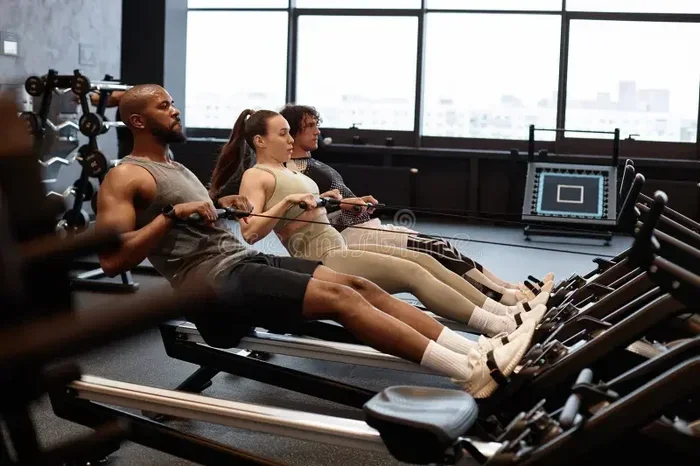
This is the starting position. Your knees are bent, your arms are extended forward, and your torso is leaning slightly over your shins. Think of this as the moment you are about to push off. Your legs, core, and arms all engage here.
The Drive
This is the powerful pushing phase. Your legs extend first, then your torso swings back, and finally your arms pull toward your chest. This is where most of the power comes from. It is like a piston firing in sequence.
The Recovery
Now you reverse the sequence. Arms extend first, then your torso leans forward, and finally your knees bend. This is the rest phase where you prepare for the next stroke. Keep it smooth and controlled.
The Finish
At the end of the drive, your legs are fully extended, your torso is upright, and your hands are pulled to your lower chest. This is a position of complete contraction. Hold it briefly before starting the recovery.
Mastering these four phases will make any rowing workout at home far more effective. Even without a machine, you can train the exact same movement pattern.
How to Do Rowing Exercise Without Machine 2: Top Methods
Now let us get to the good stuff. Here are the best ways to perform rowing exercise without machine 2 at home. Each method has its own feel and benefits. Try them all and see which ones work best for you.
Method 1: Bodyweight Squat to Row
This is one of the most popular no equipment rowing exercises. It mimics the drive phase of a real rowing stroke. Here is how to do it:
- Stand with your feet shoulder width apart.
- Lower into a squat position.
- As you stand up, pull your arms back as if gripping an oar.
- Squeeze your shoulder blades together at the top.
- Lower your arms back down as you squat again.
Do 3 sets of 12 to 15 reps. This exercise works your quads, glutes, back, and biceps all at once. It is a perfect full body workout that anyone can do.
Method 2: Resistance Band Rowing
If you have a resistance band, you are in luck. Band rows are one of the best ways to train for rowing without a rowing machine 2. The band gives you adjustable resistance that mimics the feel of pulling an oar through water.
Anchor the band around a sturdy post or door handle. Stand facing the anchor point. Hold the band handles and lean back slightly with straight arms. Pull the band toward your torso, squeezing your back muscles. Return slowly to the starting position.
This method is excellent for building pulling strength. It also helps you practice the rowing form needed for actual rowing. You can adjust the band tension to make it easier or harder.
Method 3: Towel Row on a Door
This clever trick uses nothing but a towel and a door. It is one of the simplest ways to do rowing exercise without machine 2 at home.
Fold a towel in half and close the door on it. Stand facing the door. Grab the towel ends with both hands. Lean back until your arms are straight. Then pull yourself toward the door by rowing back. Control the movement as you return to the start.
This exercise targets your lats, rhomboids, and rear delts. It also engages your core and legs if you keep your feet planted. Start with a light towel and work your way up to a thicker one for more resistance.
Method 4: Inverted Row Using a Table or Bar
Find a sturdy table or a bar at a playground. Lie underneath it and grab the edge with an overhand grip. Keep your body straight and pull your chest up to the bar. Lower yourself back down with control.
This is a powerful rowing substitute that builds serious back strength. It works the same muscles as a real rowing stroke. You can adjust the difficulty by changing the angle of your body. The more upright you are, the easier it gets. The more horizontal, the harder it becomes.
Method 5: Water Rowing Simulation
If you have access to a lake, river, or even a pool, water rowing is the closest thing to the real thing. Sitting in a boat or even a kayak, you use the same rowing movement as a machine. The water provides natural resistance that changes with your speed.
This is a fantastic way to practice rowing technique in a real-world setting. It also gives you the added benefits of being outdoors and working your core for balance. Even paddling a canoe counts as a great rowing workout.
Building a Rowing Workout at Home
Now that you know the methods, let us put them together into a real workout plan. A good rowing workout at home should include warm up, main work, and cool down.
Sample Beginner Routine
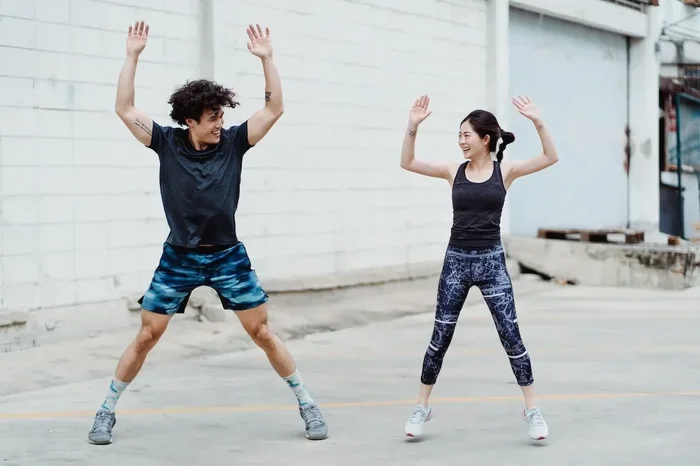
- Warm up: 5 minutes of jumping jacks or arm circles.
- Bodyweight squat to row: 3 sets of 12 reps.
- Resistance band row: 3 sets of 10 reps per side.
- Towel row: 3 sets of 10 reps.
- Cool down: 5 minutes of stretching your back and legs.
Sample Intermediate Routine
- Warm up: 5 minutes of high knees.
- Bodyweight squat to row: 4 sets of 15 reps.
- Resistance band row: 4 sets of 12 reps per side.
- Inverted row: 3 sets of 10 reps.
- Towel row: 3 sets of 12 reps.
- Cool down: 5 minutes of stretching.
Start slow and focus on form. You can always add more sets or reps as you get stronger. The key to rowing exercise without machine 2 is consistency. Do this routine 3 to 4 times per week and you will see real progress.
How to Progress Over Time
As you get fitter, you need to challenge yourself. Here are simple ways to progress:
- Add reps: Increase your rep count by 2 to 3 each week.
- Add sets: Go from 3 sets to 4 or 5.
- Slow it down: Take 3 seconds on the pull and 3 seconds on the release.
- Use thicker bands: Increase resistance gradually.
- Add a pause: Hold the top position for 2 seconds before releasing.
These small changes add up fast. Within a few weeks, your rowing muscles worked will be stronger and more defined. You will also notice better endurance and improved posture.
Common Mistakes to Avoid
Even simple exercises can go wrong if your form is off. Here are the most common mistakes people make when doing rowing without a machine:
- Rounding your back: Keep your spine neutral throughout every movement. A rounded back leads to strain and injury.
- Using only your arms: The power comes from your legs and core, not just your arms. Think of the sequential drive pattern.
- Moving too fast: Speed does not equal quality. Slow, controlled reps build more strength and better technique.
- Skipping the warm up: Cold muscles are injury prone. Always warm up before starting your rowing workout.
- Neglecting the recovery phase: The return to the starting position is just as important as the pull. Control the movement both ways.
Avoiding these mistakes will keep you safe and help you get better results faster. If you are unsure about your form, consider filming yourself and comparing it to proper technique videos.
Quick Tips for Better Results
Here are some expert tips to get the most out of your rowing exercise without machine 2 sessions:
- Breathe properly: Exhale on the drive, inhale on the recovery. This simple habit boosts your performance.
- Engage your core: Tighten your abs like you are about to be punched. This protects your lower back.
- Use a mirror: Check your form in real time to catch mistakes early.
- Stay consistent: Three sessions per week is the sweet spot for progress.
- Pair with cardio: Add a 10 minute jog or jump rope session for a complete workout.
These tips might seem small, but they make a huge difference over time. Consistency and attention to detail are what separate good results from great ones.
Expert Insights
Fitness professionals agree that rowing without a machine can be just as effective as machine based training when done correctly. The key is replicating the movement pattern and maintaining proper form throughout each rep.
Many coaches recommend starting with bodyweight movements before adding resistance. This builds a strong foundation and reduces injury risk. Once you have mastered the basic rowing technique, you can gradually add bands, towels, or household objects for extra challenge.
Experts also emphasize the importance of the recovery phase. Too many people rush through the return to starting position. Slowing down the recovery actually increases time under tension, which leads to better muscle growth and endurance gains.
For those interested in how rowing affects the body overall, check out our guide on what does the rowing machine do to your body 2 for more insights into the physiological benefits of rowing movements.
How Does Machine-Free Rowing Compare to Machine Rowing?
Both methods have their strengths. Here is a quick comparison to help you understand the differences:
| Aspect | Machine Rowing | Machine-Free Rowing |
|---|---|---|
| Cost | High ($200-$2000+) | Free or very low |
| Space Needed | Large | Minimal |
| Resistance Control | Adjustable dial | Body weight or bands |
| Form Feedback | Guided by seat and rail | Self-monitored |
| Portability | Not portable | Fully portable |
| Muscle Engagement | Full body | Full body |
| Best For | Serious training | Home workouts and beginners |
Neither option is better overall. They simply serve different needs. If you want the most authentic rowing experience, a machine is hard to beat. But if you want convenience, affordability, and flexibility, rowing exercise without machine 2 is a fantastic choice.
For those who want to take their home rowing training further, you can also explore our guide on how to train for rowing without a rowing machine 2 which covers advanced programming and training plans.
Final Thoughts
You do not need a fancy machine to enjoy the benefits of rowing. With the methods in this guide, you can do rowing exercise without machine 2 effectively and safely. Whether you choose bodyweight squat rows, resistance band work, or towel rows, the key is to stay consistent and focus on proper form.
Start with the beginner routine and work your way up. Listen to your body. Celebrate small wins. Within weeks, you will notice stronger back muscles, better endurance, and improved overall fitness. The best part is you can do this anywhere, anytime, with zero equipment.
So what are you waiting for? Get up, find a little space, and start rowing your way to a stronger, healthier you. Your body will thank you.
For more home exercise ideas, check out our article on how to do rowing exercise at home without machine for additional techniques and variations you can try today.
Frequently Asked Questions
Can I get a full body workout from rowing without a machine?
Absolutely. Bodyweight rowing exercises target your legs, back, arms, and core all at once. Movements like squat to rows and resistance band rows engage multiple muscle groups simultaneously. You do not need a machine to get a complete workout.
What is the best no equipment rowing exercise for beginners?
The bodyweight squat to row is the best starting point. It mimics the real rowing stroke and uses only your weight for resistance. Start with 3 sets of 12 reps and build from there. It is simple, effective, and requires zero equipment.
How often should I do rowing exercise without machine 2?
Aim for 3 to 4 sessions per week. This gives your muscles enough time to recover between workouts. Consistency matters more than intensity. Stick with your routine and you will see steady progress over time.
Can rowing without a machine help me lose weight?
Yes it can. Rowing burns calories and builds lean muscle, both of which support weight loss. Combining machine-free rowing with a healthy diet creates a powerful calorie deficit. For more details, check out our guide on how to use a rowing machine to lose weight 2 for additional tips.
Do I need resistance bands for machine-free rowing?
No, you do not. Bodyweight exercises are a great place to start. However, resistance bands add variety and progressive challenge as you get stronger. A simple towel and a sturdy door can also work wonders for rowing movements.
Is it safe to row every day without a machine?
Light rowing movements can be done daily, but intense sessions need rest days. Give your muscles 48 hours to recover between tough workouts. Active recovery days with gentle stretching are a great way to stay active without overtraining.