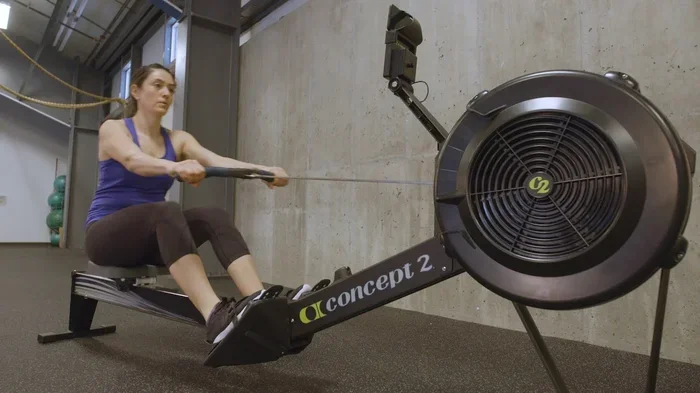
What Is a Good Distance on Rowing Machine
A good distance on a rowing machine depends on your fitness level, goals, and experience. Beginners should aim for 1,000 to 2,000 meters per session, while intermediate and advanced rowers may target 3,000 to 5,000 meters or more. The 2,000-meter row is the standard benchmark used in competitions and fitness tracking.
Rowing machines are one of the best tools you can use to build full-body strength and boost your heart health. But when you hop on the seat and start pulling, one question always comes up: what is a good distance on a rowing machine? The answer is not as simple as a single number. It depends on your fitness level, your goals, and how much time you have. Whether you are just starting out or you are a seasoned athlete, this guide will help you figure out the right distance for your workouts.
The rowing machine distance you should target changes as you get fitter. A beginner might feel exhausted after 1,000 meters, while an experienced rower can easily cover 5,000 meters or more. The good news is that there are clear benchmarks and guidelines to help you find your sweet spot. Let us break it all down so you can row smarter, not harder.
Key Takeaways
- Start small: Beginners should aim for 1,000 to 2,000 meters and build up gradually over time.
- 2,000 meters is the gold standard: This is the benchmark distance used in most fitness tests and competitions.
- Distance depends on your goals: Weight loss, endurance, and speed training all require different distance targets.
- Tracking matters: Use your rowing machine’s monitor to track distance, split time, and pace.
- Quality beats quantity: Maintaining proper form at a shorter distance is better than poor form over a long row.
- Consistency is key: Regular rowing sessions at a manageable distance lead to better results than occasional long sessions.
📑 Table of Contents
- Why Rowing Machine Distance Matters
- What Is a Good Distance for Beginners?
- What Is a Good Distance for Intermediate Rowers?
- What Is a Good Distance for Advanced Rowers?
- How to Choose the Right Distance for Your Goals
- Common Mistakes to Avoid When Setting Rowing Distance
- Quick Tips to Improve Your Rowing Distance
- How to Track and Measure Your Rowing Distance
- Final Thoughts on Rowing Machine Distance
Why Rowing Machine Distance Matters
Tracking distance on a rowing machine workout gives you a clear way to measure progress. Unlike time alone, distance tells you how much ground you actually covered. It also helps you compare your performance from week to week and month to month. When you know your distance, you can set real goals and see if you are improving.
Distance also affects how your body responds to the workout. A short, intense row builds power and speed. A longer row builds endurance and burns more calories. By choosing the right distance, you can tailor each session to what your body needs. This is why understanding rowing machine distance goals is so important for anyone who wants real results.
The Standard Benchmark: 2,000 Meters
In the rowing world, 2,000 meters is the most recognized test distance. It is the standard race distance in competitions, from local gym challenges to the Olympics. A good time for 2000m rowing varies widely based on age, weight, and fitness level, but the distance itself is the universal benchmark.
Most rowing machines come with a preset 2,000-meter workout. This makes it easy to test yourself and track improvements over time. If you want a reliable way to measure your fitness, the 2,000-meter row is the place to start. You can check your split time, which is the time it takes you to cover 500 meters, to understand your pace better.
What Is a Good Distance for Beginners?
If you are new to rowing, your first goal should be building a habit, not chasing records. A good starting distance for beginners is between 1,000 and 2,000 meters per session. This range is enough to give you a solid workout without burning you out or risking injury.
Here is a simple breakdown for beginners:
- 1,000 meters: A great first session. It takes about 4 to 5 minutes at a moderate pace and gives you a taste of the full-body effort.
- 1,500 meters: A solid middle ground. This is enough to feel the burn without overwhelming your muscles.
- 2,000 meters: The standard test distance. Try this once you feel comfortable with the basics of rowing form.
The key is to focus on proper rowing machine form from day one. A shorter row done with good technique is far more valuable than a long row with sloppy form. As your endurance grows, you can slowly add more distance to your sessions.
How to Build Distance Over Time
Building distance on a rowing machine for beginners should be a gradual process. Here are some practical tips to help you progress safely:
- Add 500 meters per week. If you start at 1,000 meters, try 1,500 the next week, then 2,000 the week after.
- Focus on consistency. Rowing three to four times per week at a steady distance beats one long session per week.
- Rest days matter. Give your muscles time to recover between sessions, especially in the early weeks.
- Use interval training. Alternate between fast and slow rows to build both speed and endurance without overloading.
Remember, the best rowing machine for home use is one that supports your gradual progress and tracks your distance accurately. A good home machine with a clear monitor makes it easy to see your numbers and stay motivated.
What Is a Good Distance for Intermediate Rowers?
Once you have been rowing consistently for a few weeks or months, you are ready to step up your distance. Intermediate rowers typically aim for 2,000 to 5,000 meters per session. At this level, your body has adapted to the basic movements, and you can handle longer efforts without excessive fatigue.
A good pace on a rowing machine becomes more important at this stage. You want to maintain a steady stroke rate while covering more ground. Here is what intermediate rowers should focus on:
- Endurance rows: Aim for 3,000 to 5,000 meters at a comfortable pace. These rows build your aerobic base and improve stamina.
- Distance challenges: Try to beat your previous distance record every two to three weeks. Small improvements add up fast.
- Split time goals: Work on lowering your split time for a set distance. For example, aim to row 2,000 meters faster than your last attempt.
At the intermediate level, you should also start paying attention to your rowing machine resistance settings. Adjusting the damper can change how hard each stroke feels, which directly impacts the distance you can cover. A moderate resistance level is usually best for building endurance.
What Is a Good Distance for Advanced Rowers?
Advanced rowers push the limits of distance and intensity. For these athletes, a good session might include rows of 5,000 to 10,000 meters or more. The focus shifts from building base fitness to maximizing performance, speed, and power output.
Advanced rowers often use structured workouts that combine distance targets with specific pace goals. Here are some common approaches:
- Long endurance rows: 5,000 to 10,000 meters at a steady, sustainable pace. These build incredible aerobic capacity.
- Distance intervals: Row 1,000 meters at a fast pace, rest for 1 to 2 minutes, and repeat 5 to 10 times. This trains speed and recovery.
- Progressive distance: Start with 1,000 meters and increase the distance every few minutes without stopping. This tests your mental and physical limits.
For advanced athletes, getting a good workout on a rowing machine means pushing boundaries while staying mindful of recovery. Overtraining is a real risk when you chase high distances without proper rest. Listen to your body and adjust your plan as needed.
How to Choose the Right Distance for Your Goals
Your fitness goals should be the main driver of your rowing distance. Different goals require different approaches to distance, pace, and intensity. Here is how to match your distance to your goals:
Goal: Weight Loss
If your goal is burning calories and losing weight, longer distances at a moderate pace work best. Aim for 3,000 to 5,000 meters per session, three to five times per week. A longer row keeps your heart rate elevated and burns more rowing machine calories overall. Combining distance-based rowing with a healthy diet gives you the best results for fat loss.
Goal: Build Endurance
For endurance building, steady-state rows are the way to go. Target distances of 4,000 to 8,000 meters at a comfortable, sustainable pace. These long rows teach your body to use oxygen efficiently and improve your cardiovascular fitness over time.
Goal: Improve Speed and Power
Speed and power come from shorter, more intense efforts. Focus on distances of 500 to 2,000 meters at a high intensity. Use interval training with short rest periods between each piece. This type of training builds explosive power and improves your rowing machine split time.
Goal: General Fitness
For overall fitness, a mix of distances works best. Alternate between short sprints (500 meters), medium rows (2,000 meters), and longer endurance rows (4,000+ meters). This variety keeps workouts interesting and challenges your body in different ways.
Common Mistakes to Avoid When Setting Rowing Distance
Even experienced rowers make mistakes when it comes to setting distance goals. Here are the most common ones to watch out for:
- Starting too fast. Many beginners try to row at full speed from the start. This leads to burnout and poor form by the halfway mark. Start at a comfortable pace and build gradually.
- Ignoring split times. Distance alone does not tell the whole story. Your split time shows how fast you are covering each 500 meters, which is a better measure of performance.
- Skipping warm-ups. Jumping straight into a long row without warming up increases your risk of injury. Spend 3 to 5 minutes rowing at an easy pace before you push harder.
- Chasing distance over form. A long row with bad technique can hurt your back and shoulders. Always prioritize proper form over hitting a distance number.
- Not tracking progress. If you do not record your distances and times, you cannot see how far you have come. Use your machine’s memory or a fitness app to log every session.
Quick Tips to Improve Your Rowing Distance
Want to row farther and perform better? Try these quick tips:
- Check your form first. Watch a video on proper rowing technique or ask a coach for feedback. Good form lets you row longer without fatigue.
- Use the damper wisely. Set the resistance to a level that feels challenging but sustainable. Most rowers perform best at a damper setting of 3 to 5.
- Breathe rhythmically. Exhale on the drive and inhale on the recovery. A steady breathing pattern helps you maintain pace over longer distances.
- Stay consistent. Rowing regularly, even for shorter distances, builds the endurance you need for longer rows.
- Set small goals. Instead of aiming for a huge distance right away, set small weekly goals and celebrate each milestone.
How to Track and Measure Your Rowing Distance
Every modern rowing machine comes with a monitor that tracks distance, time, pace, and calories burned. Understanding these numbers helps you make the most of each session. The distance display on your monitor shows exactly how far you have rowed in meters.
Your split time is one of the most useful metrics. It tells you how long it takes to cover 500 meters. A lower split time means you are rowing faster. For example, a split of 2:00 per 500 meters means it takes you 2 minutes to row 500 meters. Over 2,000 meters, that would be a total time of 8 minutes.
The stroke rate, measured in strokes per minute (spm), tells you how fast you are pulling. A comfortable rowing pace for most people is between 20 and 30 spm. During intense intervals, you might spike higher, but for distance rows, a steady rate is more sustainable.
Using these metrics together gives you a complete picture of your performance. Over time, you will see patterns in your data that show where you are improving and where you need to focus more effort.
Final Thoughts on Rowing Machine Distance
Finding the right distance on a rowing machine is all about matching your current fitness level with your personal goals. There is no one-size-fits-all answer. Beginners should start at 1,000 to 2,000 meters and build from there. Intermediate rowers can push to 3,000 to 5,000 meters, and advanced athletes may go well beyond that.
The 2,000-meter row remains the universal benchmark for testing fitness and tracking progress. Whether you are rowing for weight loss, endurance, speed, or general health, setting a clear distance goal gives your workouts purpose and direction. The most important thing is to show up consistently, maintain good form, and enjoy the process of getting stronger with every stroke.
So next time you hop on the rower, set a distance target, focus on your technique, and give it your best effort. You will be surprised at how far you can go when you have a clear goal in mind.
Frequently Asked Questions
What is a good distance for a beginner on a rowing machine?
A good starting distance for beginners is 1,000 to 2,000 meters per session. This range gives you a solid workout without overwhelming your body. As your fitness improves, you can gradually increase your distance each week.
How long does it take to row 2,000 meters?
The time varies based on your fitness level and pace. A beginner might take 10 to 12 minutes, while an experienced rower can complete it in 6 to 8 minutes. Focus on maintaining consistent form rather than chasing a fast time.
Is rowing 5,000 meters a good workout?
Yes, 5,000 meters is an excellent distance for intermediate and advanced rowers. It provides a challenging endurance workout that builds cardiovascular fitness and burns a significant number of calories in a single session.
How often should I row to see results?
Rowing three to five times per week at a manageable distance will produce noticeable results within a few weeks. Consistency matters more than distance. Even shorter sessions done regularly lead to real improvements in fitness and endurance.
Should I focus on distance or time when rowing?
Both matter, but distance gives you a clearer measure of progress over time. Time alone does not account for variations in pace and intensity. Tracking distance alongside your split time gives you the most useful picture of your performance.
Can rowing too much distance cause injury?
Yes, rowing excessive distances without proper rest or good form can lead to back strain and joint issues. Always prioritize proper technique and allow your body time to recover between intense sessions. Listen to your body and scale back if something feels off.