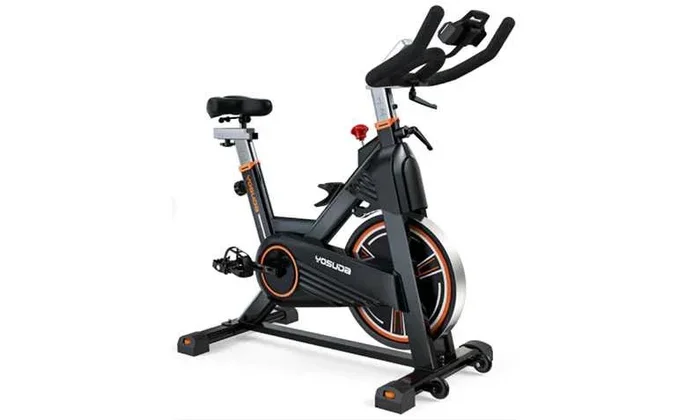
How Long to See Results from Stationary Bike

Most people start noticing improvements in energy and mood within 1 to 2 weeks of consistent stationary bike use. Visible weight loss and fitness gains typically appear after 4 to 6 weeks of regular stationary bike workouts. The exact stationary bike results timeline depends on your frequency, intensity, diet, and overall fitness level.
There is something genuinely exciting about hopping on a stationary bike and knowing that every pedal stroke is moving you closer to your goals. Whether you want to lose weight, build endurance, or simply feel healthier, the stationary bike is one of the most accessible tools you can use. But let us be honest, the question everyone really wants answered is: how long does it actually take to see results?
The truth is, there is no single magic number. Your body is unique, and so is your fitness journey. However, research and real-world experience give us a pretty clear picture of what to expect. In this guide, we will walk you through the stationary bike results timeline, what affects your progress, and exactly how to train so you get the best outcomes. If you have been wondering when your hard work on the bike will actually pay off, you are in the right place.
We will cover everything from the first week of riding to the months ahead. You will learn what happens inside your body, how to set realistic expectations, and the simple habits that speed up your progress. Let us get into it.
Key Takeaways
- Early benefits show in 1-2 weeks: Better sleep, more energy, and improved mood are the first signs of progress.
- Physical changes appear in 4-6 weeks: Weight loss, better endurance, and visible muscle tone start becoming noticeable.
- Consistency matters more than intensity: Riding 30-45 minutes most days beats occasional intense sessions.
- Diet plays a huge role: You cannot outride a bad diet. Nutrition fuels and supports your stationary bike results.
- Beginners see faster initial gains: Your body adapts quickly when you are new to exercise.
- Track your progress: Use metrics like heart rate, distance, and calories to stay motivated.
📑 Table of Contents
- What Happens When You Start Riding a Stationary Bike
- How Long Does It Take to See Physical Changes
- Factors That Speed Up or Slow Down Your Results
- How to Maximize Your Stationary Bike Results
- Common Mistakes That Delay Your Results
- When to Expect Long-Term Transformations
- Final Thoughts on the Stationary Bike Results Timeline
What Happens When You Start Riding a Stationary Bike
The moment you start a regular stationary bike routine, your body begins to respond. Even a single session triggers changes at the cellular level. Your heart rate rises, blood flows faster, and your muscles start using oxygen more efficiently. Over time, these small changes compound into real, measurable results.
Here is what you can expect in the early stages of your indoor cycling results journey:
- Days 1-3: You may feel slightly sore or fatigued. This is normal. Your body is adjusting to a new movement pattern.
- Days 4-7: Energy levels start to improve. You might notice better sleep and a brighter mood.
- Week 2: Your cardiovascular system begins to adapt. Riding the same intensity feels easier.
- Week 3-4: Endurance increases noticeably. You can ride longer or at a higher resistance without getting exhausted.
These early shifts are often more about how you feel than what you see. That is perfectly normal and actually a great sign. Your body is building a foundation for the visible fitness results that are coming.
How Long Does It Take to See Physical Changes
This is the big question, and the answer depends on several factors. Most people start seeing physical changes after 4 to 6 weeks of consistent stationary bike workouts. But let us break that down further so you know exactly what to look for.
Weight Loss Timeline on a Stationary Bike
If your primary goal is cycling weight loss, the timeline looks like this. During the first two weeks, you may not see dramatic changes on the scale. That is because your body is also retaining water as it repairs muscle tissue. However, by week 3 or 4, the scale should start moving if you are maintaining a calorie deficit.
A general rule of thumb is that a 30-minute stationary bike workout at moderate intensity burns between 200 and 400 calories, depending on your weight and resistance level. To put that in perspective, a 155-pound person burns roughly 260 calories in 30 minutes at a moderate pace. Ride consistently, pair it with smart eating, and you can expect to lose about 1 to 2 pounds per week.
If you are curious about specific calorie targets, you can check out how long it takes to burn 500 calories on a stationary bike to plan your sessions more effectively.
Muscle Tone and Leg Definition
One of the most rewarding aspects of indoor cycling is the way it shapes your lower body. Your quads, hamstrings, glutes, and calves all get activated during a ride. After about 6 to 8 weeks of consistent training, you may start noticing more definition in your legs. This happens because the stationary bike resistance builds lean muscle while also burning fat.
The key is progressive overload. Gradually increase your resistance levels or add intervals to keep challenging your muscles. Simply spinning at the same easy pace for months will not produce the same tone and definition.
Factors That Speed Up or Slow Down Your Results
Not everyone progresses at the same rate, and that is completely okay. Several factors determine how quickly you see stationary bike results. Understanding these can help you optimize your routine and avoid frustration.
How Often You Ride
Frequency is one of the biggest levers you can pull. Riding 3 to 5 times per week gives your body enough stimulus to adapt and improve. If you only ride once a week, progress will be slow. Think of it like building any habit, consistency beats intensity every single time.
For beginners, starting with 3 sessions per week of 20 to 30 minutes is a smart approach. You can always add more as your fitness improves. If you want guidance on how long a beginner should ride, check out this guide on how long a beginner should ride a stationary bike.
Your Intensity Level
Not all rides are created equal. A leisurely cruise at low resistance burns fewer calories and provides less cardiovascular stimulus than a structured interval session. To maximize your stationary bike training, mix in higher-intensity efforts.
Try adding 1 to 2 interval sessions per week. These involve alternating between high-intensity bursts and recovery periods. Interval training has been shown to boost calorie burn and improve aerobic capacity faster than steady-state riding alone.
Nutrition and Recovery
You cannot outride a poor diet. This is one of the most important truths in fitness. Even the best stationary bike workout will not produce results if your nutrition does not support your goals. Focus on eating whole foods, getting enough protein, and maintaining a slight calorie deficit if weight loss is your aim.
Recovery is equally important. Your muscles grow and repair during rest, not during the ride itself. Make sure you are getting 7 to 9 hours of sleep and taking rest days when needed. Overtraining can lead to burnout and actually slow your progress.
Your Starting Fitness Level
If you are new to exercise, you will likely see faster initial results than someone who is already fairly active. This is called “newbie gains,” and it happens because your body has so much room to adapt. Do not get discouraged if someone else seems to progress faster. Your journey is your own.
How to Maximize Your Stationary Bike Results
Now that you understand the timeline and factors involved, let us talk about how to get the most out of every session. These practical tips can help you accelerate your progress and stay motivated along the way.
Set Specific, Measurable Goals
Vague goals like “get fit” are hard to track. Instead, set concrete targets such as “ride 30 minutes at moderate intensity 4 times per week” or “burn 500 calories per session.” Measurable goals give you something concrete to work toward and make it easier to celebrate wins along the way.
Use Heart Rate Zones
Training in different heart rate zones can dramatically improve your results. For fat burning, aim for 60 to 70 percent of your maximum heart rate. For cardiovascular fitness, push into 70 to 85 percent. Most modern stationary bikes have built-in heart rate monitors, or you can use a chest strap for more accuracy.
Understanding your heart rate zones turns your ride from random pedaling into a targeted aerobic exercise bike session. You will burn more calories, improve your endurance faster, and have a clear framework for each workout.
Track Your Progress
Tracking is one of the simplest yet most powerful habits you can build. Record your ride duration, distance, calories burned, and how you felt after each session. Over weeks and months, this data becomes incredibly motivating. You can look back and see exactly how far you have come.
Many fitness apps and even the bikes themselves offer tracking features. Some people also like to take progress photos or measurements every two weeks. The scale does not always tell the full story, and visual progress can be incredibly encouraging.
Add Variety to Your Routine
Doing the exact same ride every day can lead to boredom and plateaus. Mix things up by trying different workout styles. Some days, do a long steady ride at moderate intensity. Other days, try HIIT training on a stationary bike or hill climb simulations. Variety keeps your body guessing and your mind engaged.
If you want to learn more about structuring your sessions, check out how to do interval training on a stationary bike for an effective way to boost your results.
Common Mistakes That Delay Your Results
Sometimes the reason results are slow is not about working hard enough, but about working smart. Here are the most common mistakes people make on their stationary bike journey:
- Skipping warm-ups: Jumping straight into high intensity increases injury risk and reduces performance. Always warm up for 5 to 10 minutes at a easy pace.
- Riding at the same intensity every day: Your body adapts quickly. Without variation, you stop making progress.
- Neglecting resistance: Many people keep the resistance too low. Increasing resistance builds more muscle and burns more calories.
- Poor posture: Slouching or hunching over the handlebars reduces engagement and can cause back pain. Sit up tall and engage your core.
- Ignoring nutrition: As mentioned earlier, what you eat matters just as much as how long you ride.
- Giving up too soon: Results take time. Trust the process and stay consistent.
Avoiding these pitfalls puts you on the fast track to seeing real, lasting stationary bike results.
When to Expect Long-Term Transformations
While early results are motivating, the real transformations happen over the long term. After 3 months of consistent riding, most people notice significant improvements in cardiovascular health, body composition, and overall stamina. After 6 months, the changes can be truly dramatic.
At the 3-month mark, you might notice that everyday activities feel easier. Climbing stairs, carrying groceries, or keeping up with kids becomes less taxing. Your resting heart rate may drop, which is a strong indicator of improved heart health. Your clothes may fit differently, and you may have more energy throughout the day.
By the 6-month point, consistent riders often report visible changes in body shape, improved mood and mental health, and a much stronger relationship with exercise. The stationary bike becomes less of a chore and more of a part of your lifestyle. That is when you know the results are truly lasting.
If you are interested in longer sessions and want to know how much riding equals significant calorie burn, you can explore how long it takes to burn 500 calories on an exercise bike for more detailed planning.
Final Thoughts on the Stationary Bike Results Timeline
Seeing results from a stationary bike is absolutely achievable for virtually everyone. The key is understanding that progress is a journey, not a destination. Your first few weeks will bring subtle but meaningful changes in how you feel. Within a month or two, the physical changes begin to show. And over several months, the transformation can be remarkable.
Stay patient, stay consistent, and focus on the process rather than the clock. The stationary bike is a powerful tool, but it works best when combined with smart nutrition, proper recovery, and a positive mindset. You have already taken the first step by seeking out this information. Now it is time to get on the bike and start pedaling toward your goals.
Every ride counts, no matter how short or long. Show up, do the work, and trust that the results are coming. They absolutely are.
Frequently Asked Questions
How long does it take to see weight loss results from a stationary bike?
Most people notice initial weight loss after 2 to 4 weeks of consistent riding, especially when combined with a healthy diet. Visible and measurable weight loss typically becomes apparent after 4 to 6 weeks. The rate depends on your calorie intake, workout intensity, and how often you ride.
Can I see results from a stationary bike in just 2 weeks?
Yes, you can see early results within 2 weeks, though they are mostly internal. You may notice better energy, improved sleep, and a boost in mood. Physical changes like weight loss and muscle tone usually take a bit longer, around 4 to 6 weeks.
How many minutes should I ride a stationary bike to see results?
For meaningful results, aim for at least 30 minutes per session, 3 to 5 times per week. If you are just starting out, 20 minutes is a great place to begin. The key is consistency over time rather than long single sessions.
Is a stationary bike better than walking for seeing results?
A stationary bike generally burns more calories than walking at a moderate pace and provides a more intense cardiovascular workout. However, walking is also excellent for health and is easier on the joints. The best choice depends on your fitness level, goals, and any physical limitations you may have.
What should I eat to support my stationary bike results?
Focus on a balanced diet rich in lean protein, whole grains, fruits, and vegetables. If your goal is weight loss, maintain a moderate calorie deficit. Eating enough protein helps repair and build muscle after your rides. Stay hydrated and avoid relying on processed or sugary foods to fuel your workouts.
Do I need to ride every day to see results from a stationary bike?
No, you do not need to ride every day. In fact, rest days are important for recovery and muscle growth. Riding 3 to 5 days per week is plenty for most people to see significant results. What matters most is showing up consistently over weeks and months.
=== INTERNAL LINKS ===
For more on how long it takes to see weight loss results, check out how long you should ride a stationary bike to lose weight.
Learn more about maximizing your calorie burn with these tips to burn more calories on a stationary bike.
Curious about specific calorie targets? Find out how long it takes to burn 500 calories on a stationary bike in a single session.